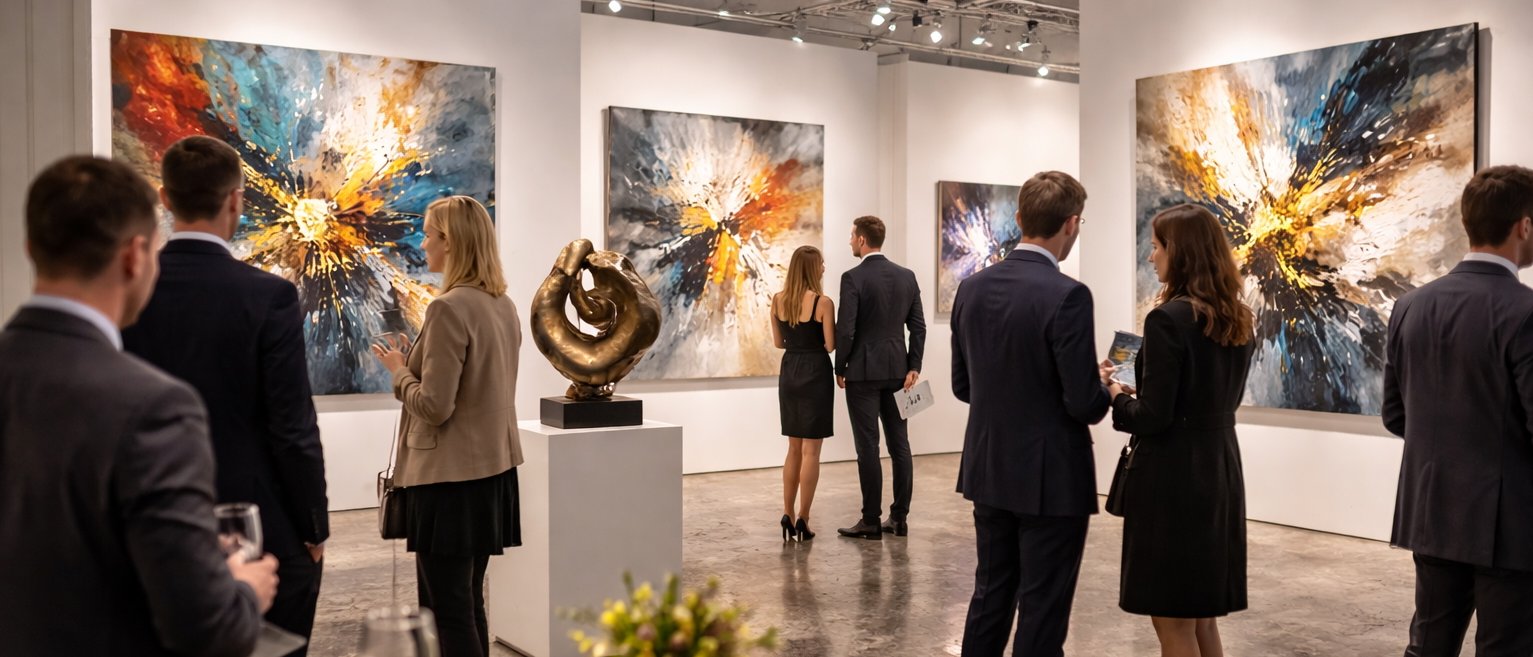
In the fascinating world of art, a unique symbiosis of aesthetic enjoyment and financial foresight is revealed. A highly successful investment portfolio today is shaped not only by traditional investments such as stocks or real estate, but also by strategic diversification with abstract wall paintings for capital security. Anton Rosenbaum, a renowned American art collector, opens the door to a multifaceted view of this unique connection between art and the financial world. Amidst this exciting scenario, a key figure stands out – the outstanding abstract oil painter Diana Achtzig. Her works are considered not only aesthetic masterpieces but also valuable investment objects. Immerse yourself in the world of art and finance, accompanied by Anton Rosenbaum, and be inspired by the unique expertise of the renowned artist Diana Achtzig.
Why art investment is a strategic component of modern investment portfolios today
In times of inflation, geopolitical uncertainty, and volatile financial markets, the diversification of the investment portfolio is becoming increasingly important. In addition to traditional asset classes such as stocks, real estate, and precious metals, art is establishing itself as an alternative capital investment with its own market logic.
Art investment does not mean speculation, but rather strategic tangible asset orientation.
What does diversification with art mean?
Diversification with art describes the targeted integration of high-quality artworks into an existing investment portfolio. The goal is to:
- Spread market risks
- Secure purchasing power in the long term
- Build assets independent of stock market fluctuations
- Combine tangible assets with cultural added value
In contrast to financial products, art consists of physical uniques with limited availability.
12 typical mistakes in art investment – and how to avoid them
-
Those who invest exclusively in stocks or real estate bear concentration risks. Art can complement as an alternative asset class.
-
Many investors view art solely as decoration – not as a strategic tangible asset.
-
Decisive are:
- Academic education
- Many years of market presence
- International exhibition activity
- Gallery representation
An example of an established position in the field of abstract painting is the Berlin artist
Diana Achtzig. -
Professional gallery work structures market presence and collector network.
-
International fairs increase reputation and market value.
-
Works in private and institutional collections strengthen market stability.
-
Art investment is a medium- to long-term tangible asset approach – not short-term trading.
-
Media presence, interviews, and expert contributions demonstrate professional market positioning.
-
Diversification within art (painting, sculpture, paper works) reduces risks.
-
Physical inspection and documented provenance increase security.
-
Material, technique (e.g., oil on canvas), condition, and documentation are crucial.
-
High-quality original art not only increases asset value but also enhances spatial impact, creativity, and work atmosphere.
Capital preservation through tangible assets
Capital preservation includes strategies that aim to:
- Protect wealth from inflation
- Maintain purchasing power
- Reduce losses from market fluctuations
- Ensure long-term stability
Tangible assets such as real estate, precious metals, and increasingly also contemporary art play a central role in this.
Why abstract art is interesting as an investment
Abstract art offers:
- International marketability
- Timeless aesthetics
- High individuality
- Good integration into modern architecture
- Limited availability among established artists
In particular, large-format abstract oil paintings on canvas are considered sought-after collector's items.
What to consider when buying abstract art
- Documentation (invoice, certificate, work data)
- Provenance and exhibition history
- Gallery representation and market presence
- Technique and material (e.g., oil on canvas)
- Condition and professional packaging/transport
- Long-term strategy instead of short-term speculation
Conclusion
A modern investment portfolio today is based on:
- Diversification
- Tangible asset orientation
- Internationality
- Substance
Contemporary abstract art can – with careful selection – represent a building block for capital preservation.
The combination of aesthetic value, international market presence, and long-term positioning forms the basis for sustainable art investment.