Exhibition: Body Representation between Nude and Nakedness
Galerie Gortaire, Berlin | February 5 – March 21, 2026
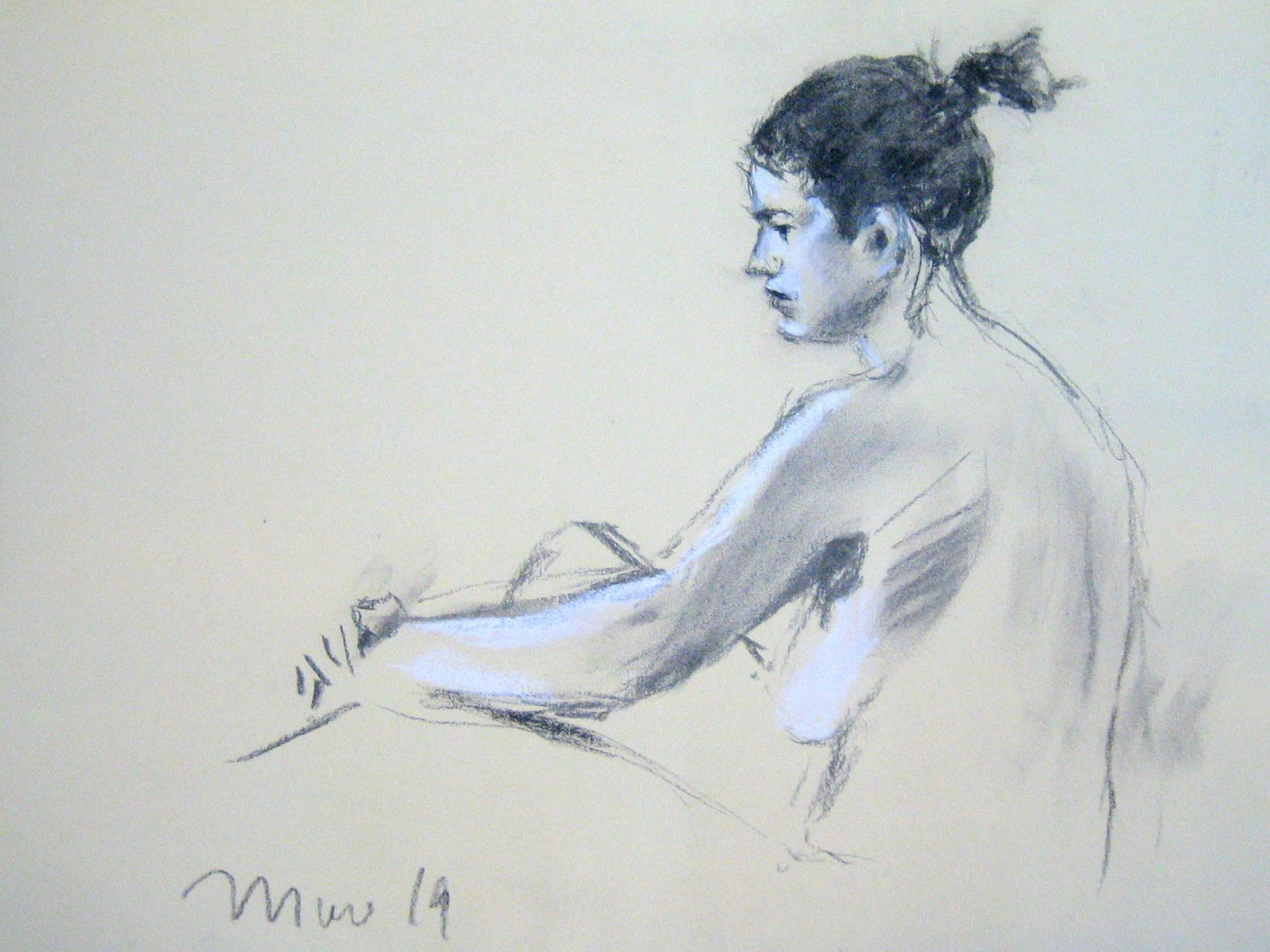
The exhibition The Naked Human at the Berlin Galerie Gortaire is dedicated to the pastel works of the painter and graphic artist Klaus Illner (1947–2024). It focuses on a central thematic complex of his extensive oeuvre: the depiction of the human body beyond idealizing, sexualizing, or standardizing attributions.
Illner's works on paper open an analytical view of the body as a bearer of presence, materiality, and individuality. In doing so, they consciously stand in the tension between art historical tradition and contemporary body discourse.
Nude and Nakedness: a conceptual distinction
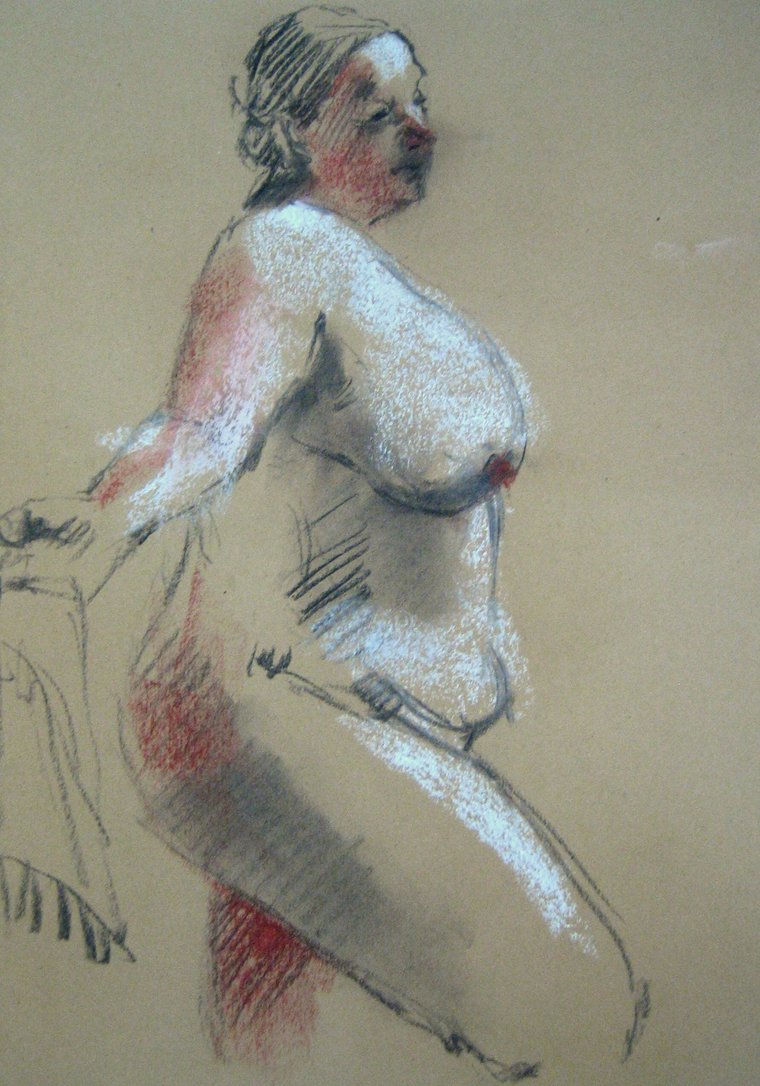
In the art historical discussion, the distinction between act and nudity is central. The act is traditionally considered an aesthetically regulated, culturally coded form of representation: It follows historically developed norms of proportion, harmony, and composition. Nudity, on the other hand, refers to a state of exposure that is not necessarily aestheticized or idealized, and points to vulnerability, corporeality, and social reality.
Illner's pastels are in this sense less committed to the classical act than to the depiction of the naked human. His figures do not appear as projection surfaces of a standardized ideal of beauty, but as individuals with weight, posture, tension, and imperfection. The works thus evade a purely decorative interpretation and open up a space for reflection on body perception and visibility.
Pastel on Paper: Medium and Art Historical Context
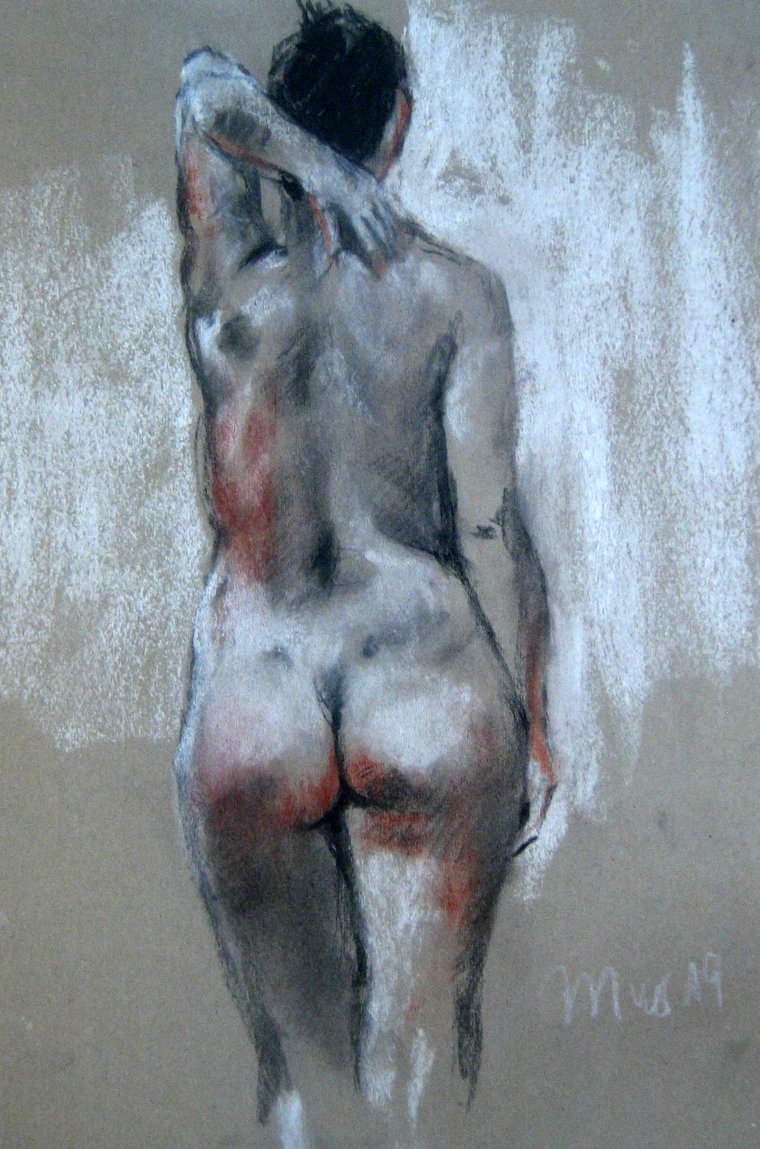
The choice of pastel technique is no coincidence for Illner's work. Chalk is one of the oldest drawing media in European art and has been used since the Renaissance, for example in red chalk studies, to examine the human body. The technique directly combines line and surface, drawing and painterly application.
Illner uses pastels with a strong awareness of the material. The chalk trace remains visible, the abrasion of the pigment is not concealed but contributes to the image's statement. This openness reveals the process of depiction: The body does not emerge as a closed form, but as the result of a probing, observant approach. In doing so, Illner stands in a drawing tradition that makes seeing itself the subject.
Formal analysis: line, space, and perception of the body
Formally, Illner's pastels are characterized by a clear, economical line. The line serves less as a contour than as a structuring element that suggests volume, weight, and movement. Spaces are often only hinted at or left completely open; the body asserts itself as the central pictorial event against a neutral background.
This reduction directs attention entirely to the conception of the body. Illner's figures are neither dramatically staged nor narratively charged, they convey a state of calm presence: resting in themselves, sometimes vulnerable, sometimes confident, always free from exaggerated expressiveness. It is precisely this restraint that gives the works their intensity.
Body Discourse, Gaze and Intimacy
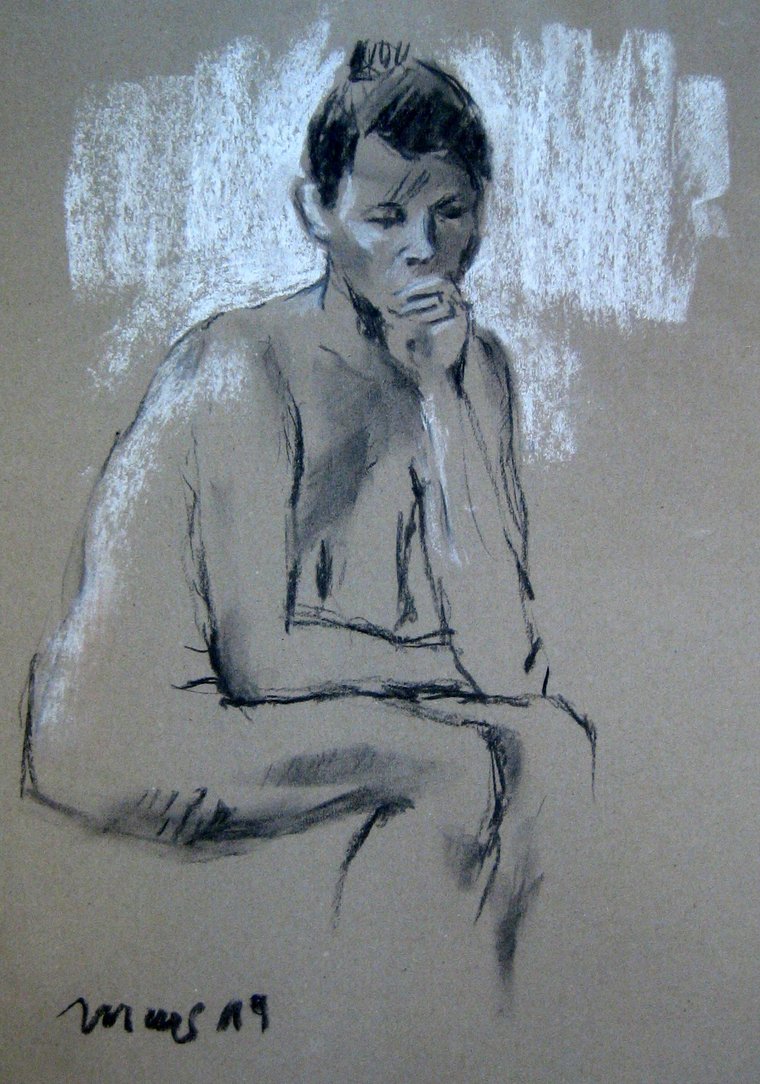
In the context of current body discourses, Illner's pastels gain special relevance. In a visual culture shaped by media beauty norms and sexualized body images, his works deliberately decelerate. They escape the voyeuristic gaze and demand calm, contemplative attention.
Intimacy here arises not through erotic exaggeration, but through closeness in perception. The artist's gaze is analytical, not possessive. Those who feel eroticism do not find it in the depiction itself, but in their own perception. Illner's works refuse any form of arousal in favor of a sober, respectful encounter with the body.
Klaus Illner in the context of his Œuvre
The showcased group of works is part of an estate of over 3000 pieces, most of them on paper. Nature studies, portraits, landscapes, and surreal imagery form the broader context in which the nude and body studies play a consistent, recurring role. They are not a peripheral topic but a central subject of his artistic work.
An overview of the versatile work of the Mecklenburg artist was also provided by the memorial exhibition “A Life in Motion in Color” at the KunstWasserWerk Schwerin: Works from various creative phases, from nature-based studies to expressive soul images, accompanied by music and personal memories.
Exhibition, market, and collector interest
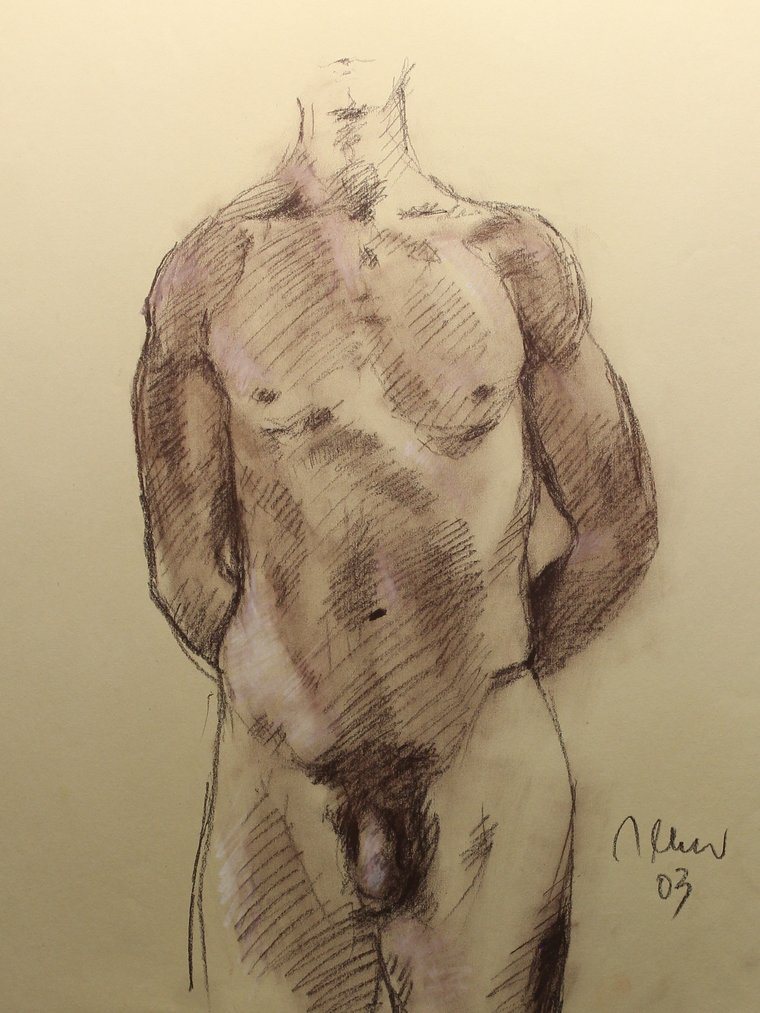


The Galerie Gortaire presented Der nackte Mensch as an art-scientifically based exhibition, aimed at both an expert audience and collectors. The pastels on display were available for purchase, with and without framing. Their drawing quality, clear art-historical classification, and cohesive body of work make them a consistent position within contemporary paper works.
Accompanying events included a reading from Stillleben by Matthias Illner (February 28, 2026) and a closing concert with Steffen Illner (March 21, 2026), which placed the work in a broader cultural context.
Conclusion
The Naked Human presents Klaus Illner as an artist who does not interpret the body but takes it seriously. His pastels formulate a quiet yet consistent counter-position to standardized body images and open up a space where drawing, material, and perception come together to form a precise artistic statement.
Matthias Illner in the Gortaire Galerie
In the same gallery, Matthias Illner presented his exhibition "The False Sisyphus": figurative painting between myth, modern life reality, and psychological symbolism. Diana Achtzig introduces the gallery and works in the podcast.
Achtzig Podcast #227
Gortaire Gallery
Gortaire Galerie
Scherenbergstraße 6
10439 Berlin
Opening hours:
Wednesday – Saturday 3 – 8 PM
Sunday by appointment
Contact: Matthias Illner
030 30365306 or 0176 69766821