Prenzlauer Berg as a cultural epicenter
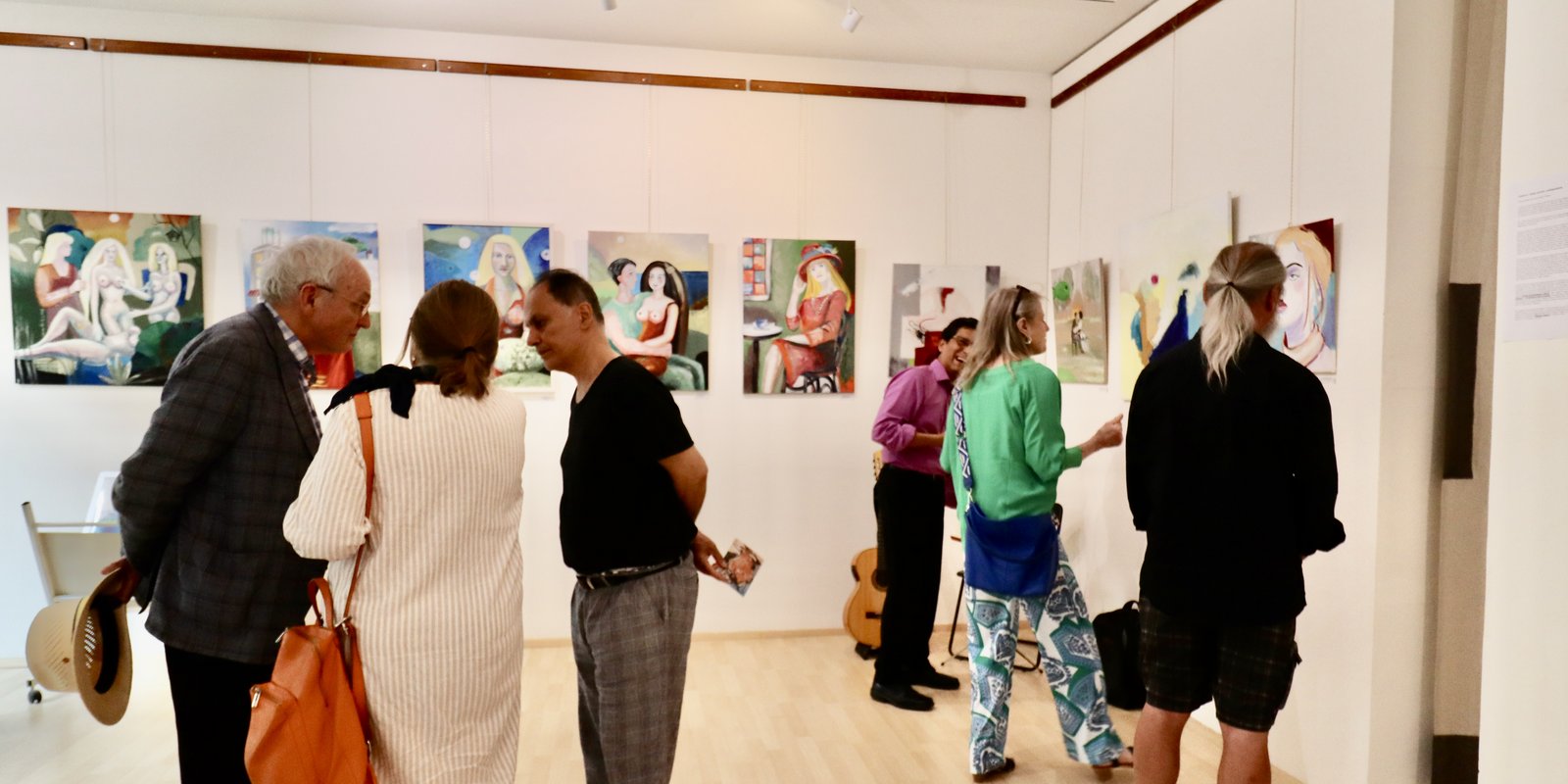
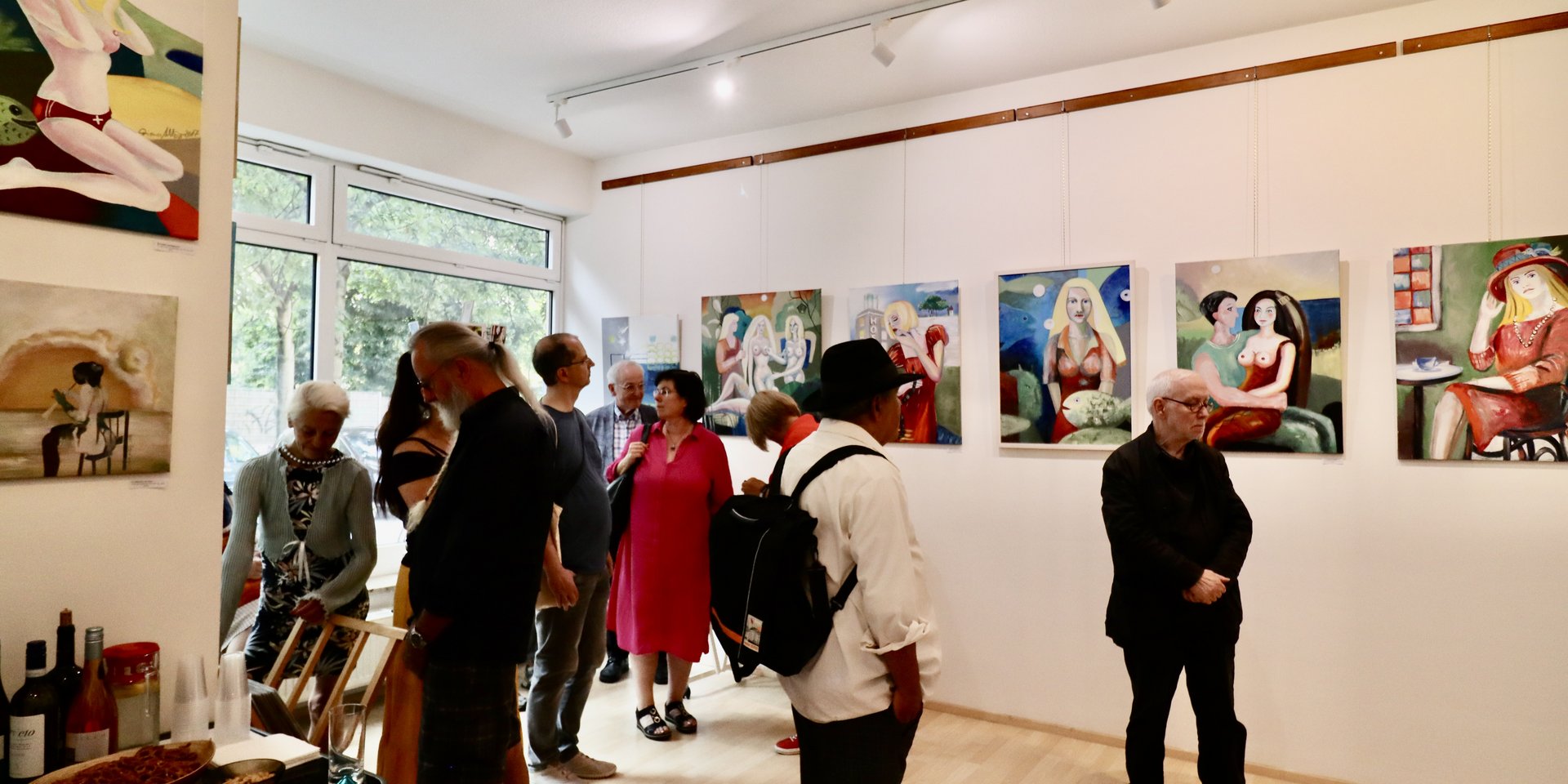
Since the 1990s, Prenzlauer Berg has developed into a cultural melting pot that attracts artists from all over the world. The scene thrives on small, independent galleries like Galerie Gortaire, which allow for an intimate encounter with art, far from large auction houses or institutional museums. Here, visitors can experience the works directly, engage in conversation with the artists, and immerse themselves in the creative energy of the neighborhood.
Why buy art from small galleries?
Acquiring artworks from galleries like Galerie Gortaire is more than just a purchase – it is a conscious investment in creativity and culture. By buying, you not only support emerging artists but also the independent gallerists, who often act as curators, networkers, and mediators themselves.
Art historian Sarah Kunz explains: "Small galleries create spaces that allow artistic visions to be experienced in a direct and unadulterated form. Acquiring a work from such a gallery means becoming part of this creative process."
Artworks as an enrichment for your home
Unique artworks give your home character and individuality. A painting, a sculpture, or a photograph from a small gallery tells a story that goes beyond the aesthetic level. Art inspires, stimulates conversations, and creates an emotional connection to the spaces we inhabit daily.
Art as Social Responsibility
By purchasing art from independent galleries, you also contribute to the preservation of a diverse art scene. The gallerist Diego Gortaire explains: "Each sold piece not only provides financial security for the artists but also confirms that their visions are appreciated."
The Gortaire Gallery in Prenzlauer Berg is a place where art and society meet. Visit the group exhibition "Painting, Collages, Art Prints, Sculptures, Photography" and let yourself be inspired – not only for your home but also for your perspective on art.
Christmas in the Gallery: Why an Opening is the Perfect Gift for Your Senses
The group exhibition at the renowned Gortaire Galerie promises an impressive experience. Artists such as Anette Abrecht, Phillip Hennevogel, Diana Achtzig, Kristin Maul, Manfred Rother, Svetlana Grecova, Younis Al Azzawy, and Diego Gortaire present their works, which captivate with their dynamism and expressiveness.
The dark days of winter are often perceived as a time for introspection and reflection. But what if you could use this time to be inspired by art and support the creative voices of our time?
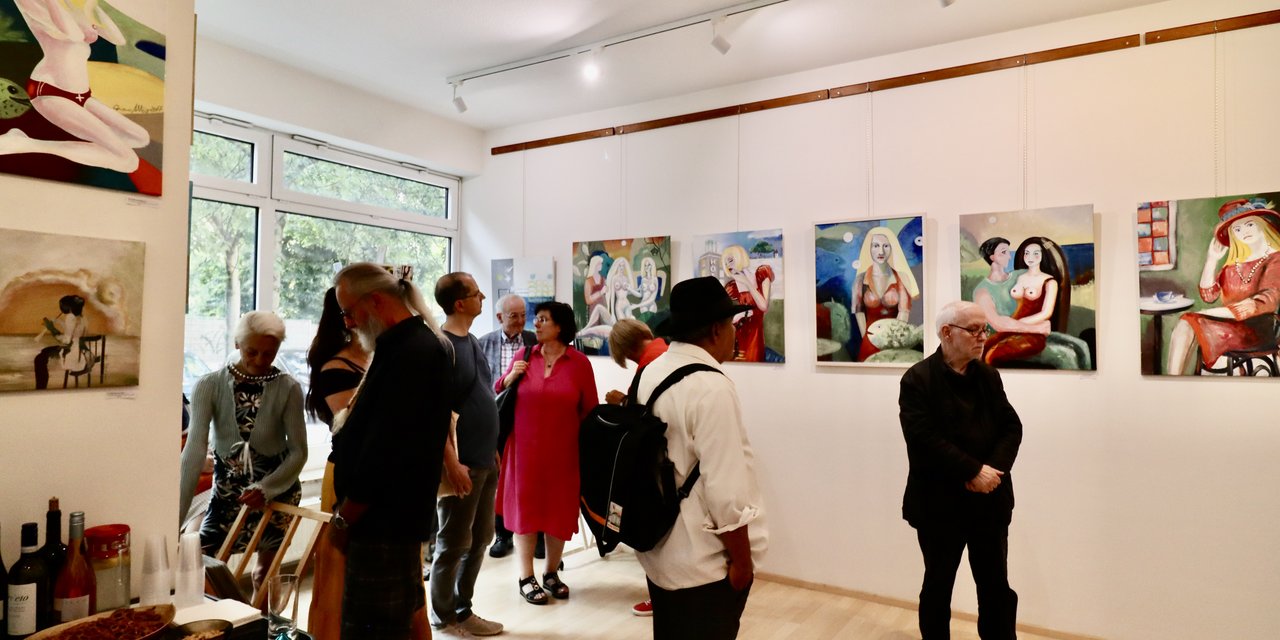
The Galerie Gortaire in Prenzlauer Berg warmly invites you to discover the group exhibition "Painting, Collages, Art Prints, Sculptures, Photography." Under the curatorial direction of Diego Gortaire, this exhibition brings together outstanding talents like Diana Achtzig, Phillip Hennevogel, and Svetlana Grecova in a unique dialogue of artistic media.
A place of encounter and inspiration
The vernissage on November 28, 2024, at 7:00 PM is more than just the beginning of an exhibition – it is an event that connects art and community. Visitors have the opportunity to meet the artists in person, question their intentions, and experience the emotional depth of their works.
Galerie Gortaire
Address:
Galerie Gortaire, Scherenbergstraße 6, 10439 Berlin
Opening hours:
Wednesday to Friday: 4 PM - 8 PM
Saturday: 6 PM - 8 PM
Conclusion: Experience art up close
With this group exhibition, Galerie Gortaire makes a strong statement for the diversity and power of contemporary art. Take the opportunity to be part of this creative moment. Visit the opening and let yourself be enchanted by the art in Prenzlauer Berg.
Manfred Rothers' fish paintings as a poetic reflection on life and transience
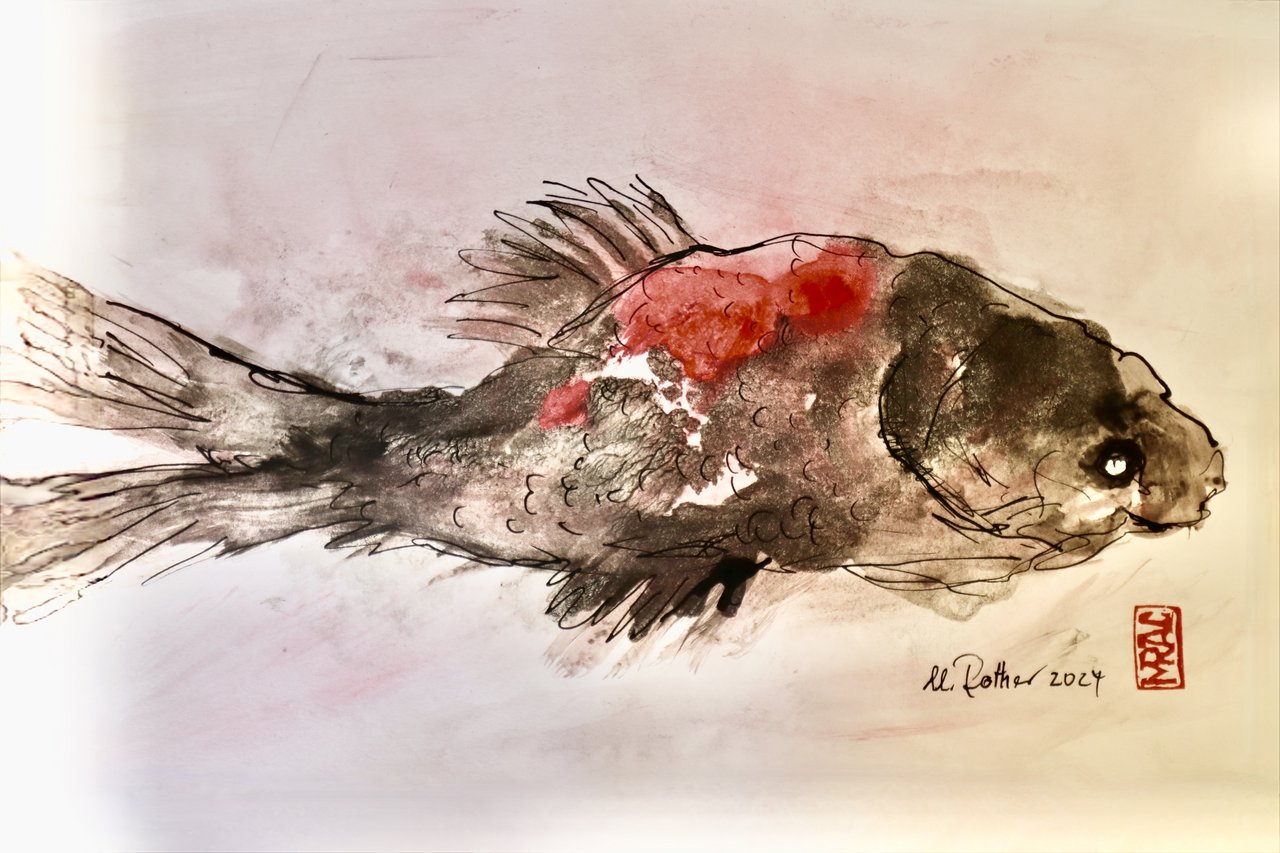
Manfred Rother, a renowned painter and sculptor, has secured a firm place in the contemporary art scene. His works, particularly his iconic fish paintings, are characterized by a subtle yet profound aesthetic. With black paint on white paper and occasional red accents, Rother succeeds in impressively addressing existential themes such as transience, transformation, and the interplay of simplicity and complexity.
The Poetic Power of Reduction: Manfred Rother's Fish Paintings as a Meditation on Life and Transience
Manfred Rother, a significant painter and sculptor, creates an impressive connection between minimalism and existential depth with his iconic fish paintings. His works, often in black and white and occasionally accented with red, address transience, transformation, and the poetry of life.
The Role of Monotype
An essential part of Rother's technique is monotype, an artistic process dating back to the 17th century, presumably developed by Giovanni Benedetto Castiglione. This results in a unique print that cannot be reproduced, making each work a one-of-a-kind piece. This method underscores the transience and uniqueness of his motifs and ideally fits the themes Rother addresses in his works.
Rother and the Symbolism of the Fish
The fish as a motif has a long tradition in art history. In early Christian depictions, it symbolized faith and hope, while in Asian cultures, it often stands for fertility and prosperity. Rother draws on this symbolic depth but interprets it in a highly personal and modern way. His fish appear simple at first glance, almost minimalist, yet this reduction to the essentials allows the viewer to delve into the complex meanings of the works.
Rother said in an interview: "The fish is more than a living being to me; it is a metaphor for the constant flow of life. It swims in water, which is invisible yet omnipresent, just like time and life itself."
The Aesthetics of Black and White
The decision to paint his fish images exclusively in black on white is by no means accidental. This reduction directs the viewer's attention to form, movement, and space. The tension between the deep black of the ink and the empty space of the white paper creates a meditative silence, yet it is permeated by intense dynamism.
The Red Color Accents: A Visual Enigma
Occasionally appearing red accents in Rother's works act like small explosions of life. They may symbolize blood or vulnerability and highlight the fish from the monochrome environment. Rother himself describes these elements as "flashes of thought" that disrupt order and thus illustrate the unpredictability of life.
The Role of the Berolina Galerie
Manfred Rother's recent exhibition at the Berolina Galerie in Berlin impressively demonstrated how reduced artworks can generate great emotional resonance. The monotypes presented as part of this exhibition highlighted the fragility and elegance of his motifs and invited viewers to reflect on the fragility of life.
Conclusion
With his fish paintings, Manfred Rother has made a unique contribution to contemporary art. His works, characterized by the use of monotype and their subtle symbolism, invite one to pause and appreciate the quiet beauty of life. The exhibition at the Berolina Galerie emphasized that even in a visually overloaded world, reduction to the essentials can produce timeless art.
Diana Achtzig's fish paintings with young girls and golden lucky fish
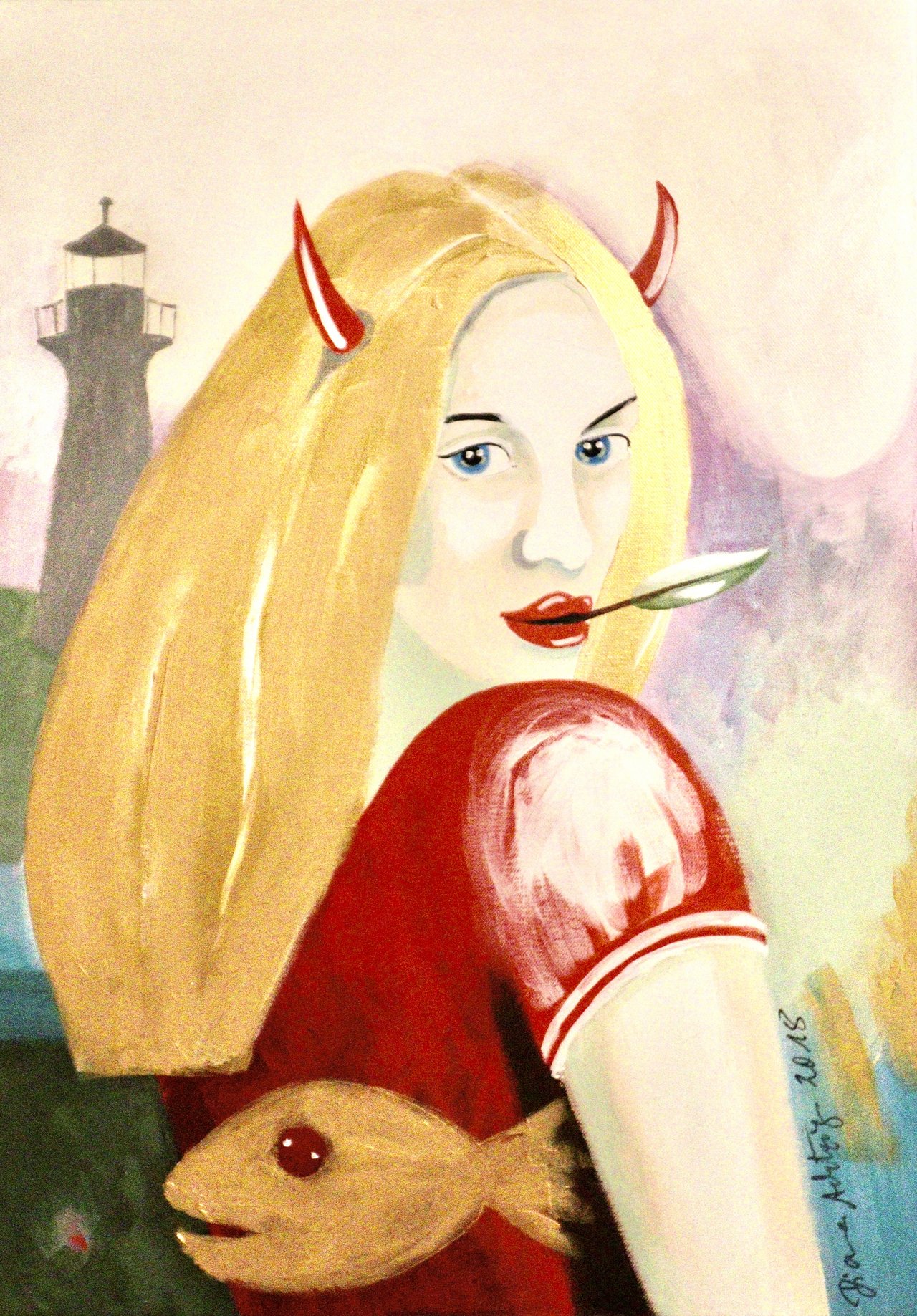
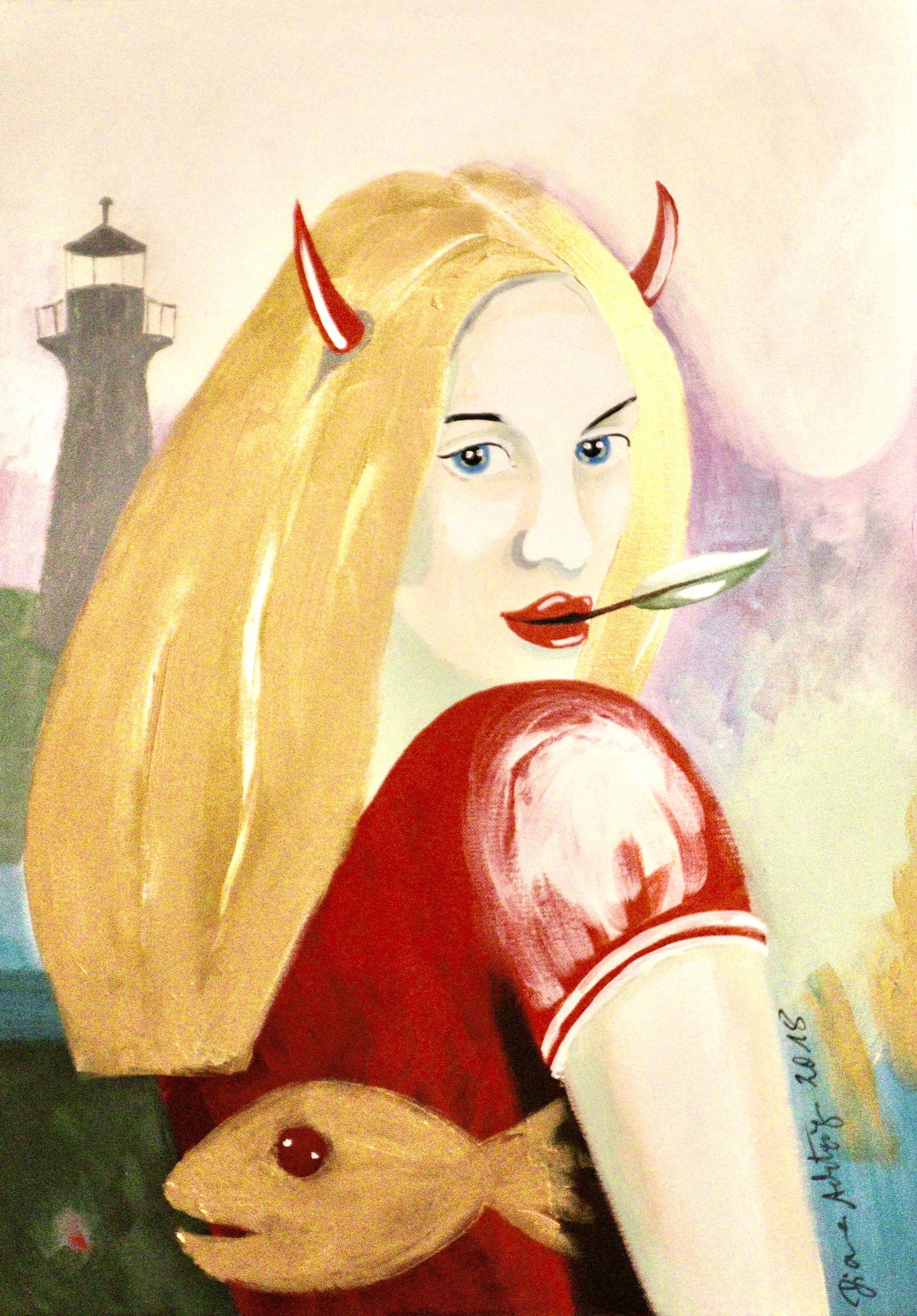
Diana Achtzig, a versatile artist who impresses in both painting and sculpture, presents in her current series a fascinating combination of fairy-tale vitality and ecological awareness. With her fish paintings depicting young girls and golden lucky fish in bright, joyful colors, she has made a special name for herself in the contemporary art scene. The works, created on recycled canvases, are currently exhibited at the renowned The Holy Art Gallery in London and are attracting great interest from both art lovers and environmentalists.
The Poetic World of the Golden Lucky Fish
In Achtzig's work, the golden lucky fish stands as a central motif. Symbolically, the fish is a bearer of prosperity, luck, and spiritual fulfillment in many cultures. Achtzig connects these universal meanings with a playful ease by depicting the fish in bright gold, giving them an almost supernatural aura. The golden color represents not only wealth but also hope and transformation.
"The golden lucky fish are a symbol for me of striving for a better life," explains Diana Achtzig. "They stand for the dreams and wishes we all carry within us, and for how important it is to preserve them."
Girls and Fish: A Symbiosis of Innocence and Wisdom
In many of her paintings, Achtzig combines the golden fish with depictions of young girls. These girls often appear dreamy, as if they live in a parallel world where the boundaries between reality and fantasy blur. These childlike figures represent an unspoiled view of the world – one that is full of possibilities and magic.
The connection between girls and fish is rich in symbolism. While the girls stand for youth, purity, and the future, the fish embody wisdom and the connection to nature. Their coexistence in Achtzig's paintings creates a harmonious world where humans and animals exist in peaceful symbiosis.
The Use of Bright, Joyful Colors
Achtzig's color palette is vibrant and optimistic. Her works are characterized by bright blues, turquoises, and yellows that remind one of the shimmering water of a lake in sunlight. The golden tones of the fish contrast wonderfully with the soft pastel tones of the girls, creating a visual harmony that captivates viewers.
The artist says: "My colors are meant to convey joy and hope. We live in an often gloomy world, and I want to spread light and positivity with my art."
Sustainability in Art: Recycled Canvases as a Canvas for Dreams
An outstanding aspect of Achtzig's work is her commitment to sustainability. The use of recycled canvases is not only an artistic statement but also a conscious act of environmental awareness. Each canvas she uses carries a story within it – traces of previous works, textures, and irregularities that give the new images depth and character.
"I want to show that we don't have to throw away the old to create something new," explains Achtzig. "The canvases are like life itself – they carry their past within them, and that's what makes them so special."
The Exhibition at The Holy Art Gallery in London
The The Holy Art Gallery in London provides the perfect setting for Achtzig's works. The exhibition space in The Factory on Shacklewell Lane combines industrial charm with a contemporary aesthetic that brilliantly showcases the vibrant colors and playful energy of Achtzig's paintings.
The 2024–2025 exhibition has already attracted numerous visitors, including collectors, critics, and families inspired by the life-affirming message of the works. Particularly noteworthy is the response from younger art lovers who are drawn to the mix of fantasy and environmental awareness.
A Commentary on the Relationship Between Humans and Nature
In a world increasingly marked by environmental destruction and alienation, Achtzig's works offer a refreshing perspective. The connection between humans and nature, as depicted in her paintings, serves as a reminder of the importance of preserving this relationship.
The golden fish and the young girls act as ambassadors of a better world – a world where harmony, responsibility, and hope prevail.
Art critic Dr. Elaine MacGregor comments: "Diana Achtzig's works are more than mere depictions. They are a call to all of us to preserve the beauty in the world and to go through life with open eyes."
The Influence of Achtzig's Works on Contemporary Art
Achtzig's fish paintings exemplify a trend in contemporary art that focuses on sustainability, symbolism, and positive messages. Her works remind us that art does not only have to provoke or question but can also provide comfort and offer hope.
Art historian Prof. Dr. Charlotte Nielsen describes Achtzig's works as "a successful fusion of aesthetic ambition and social responsibility. Her paintings show that beauty and sustainability can go hand in hand."

Conclusion: An artist who touches
Diana Achtzig's fish paintings are much more than decorative artworks. They invite you to see the world with different eyes – as a place full of wonder, responsibility, and beauty. Her current exhibition at The Holy Art Gallery is a must for anyone who wants to be inspired by the power of art and a testament to the transformative effect that art can have on our perception of the world.
Experience the magic of modern wall art and more at Galerie Gortaire!
Immerse yourself in an extraordinary group exhibition in the heart of Prenzlauer Berg! From November 28 to December 28, 2024, Galerie Gortaire transforms into a vibrant space for contemporary art. Under the direction of gallerist Diego Gortaire, an inspiring journey through painting, collage, art print, sculpture, and photography awaits you.
Be part of this captivating encounter with art that touches, inspires, and excites
On November 28, 2024, at 7:00 PM, artists
like Diana Achtzig, Phillip Hennevogel, and Svetlana Grecova celebrate art up close with you! A dialogue between creative worlds – don't miss this experience.
Address: Galerie Gortaire, Scherenbergstraße 6, 10439 Berlin
Admission: Free!