The Fellowship at a Glance
The EU-funded Innovation Center IUNO at HTW Berlin is seeking an artistic concept for its Artistic Fellowship 2027 that combines artificial intelligence (AI) and extended reality (XR) into a novel, interactive cultural experience. IUNO stands for "Innovation Center for Intelligent and Immersive Technologies in the Independent Cultural Scene." The open call is aimed at artists, creative teams, and small businesses in the creative industry from Berlin.
This year's theme is "Anthropomorphism – Between Human and Machine." A panel of experts will select a single concept. This will be implemented together with the interdisciplinary IUNO team from February 2027 for about a year at the Research Center for Culture and Computer Science at HTW Berlin. The application deadline is November 23, 2026, at 11 PM.
What is the topic of anthropomorphism about?
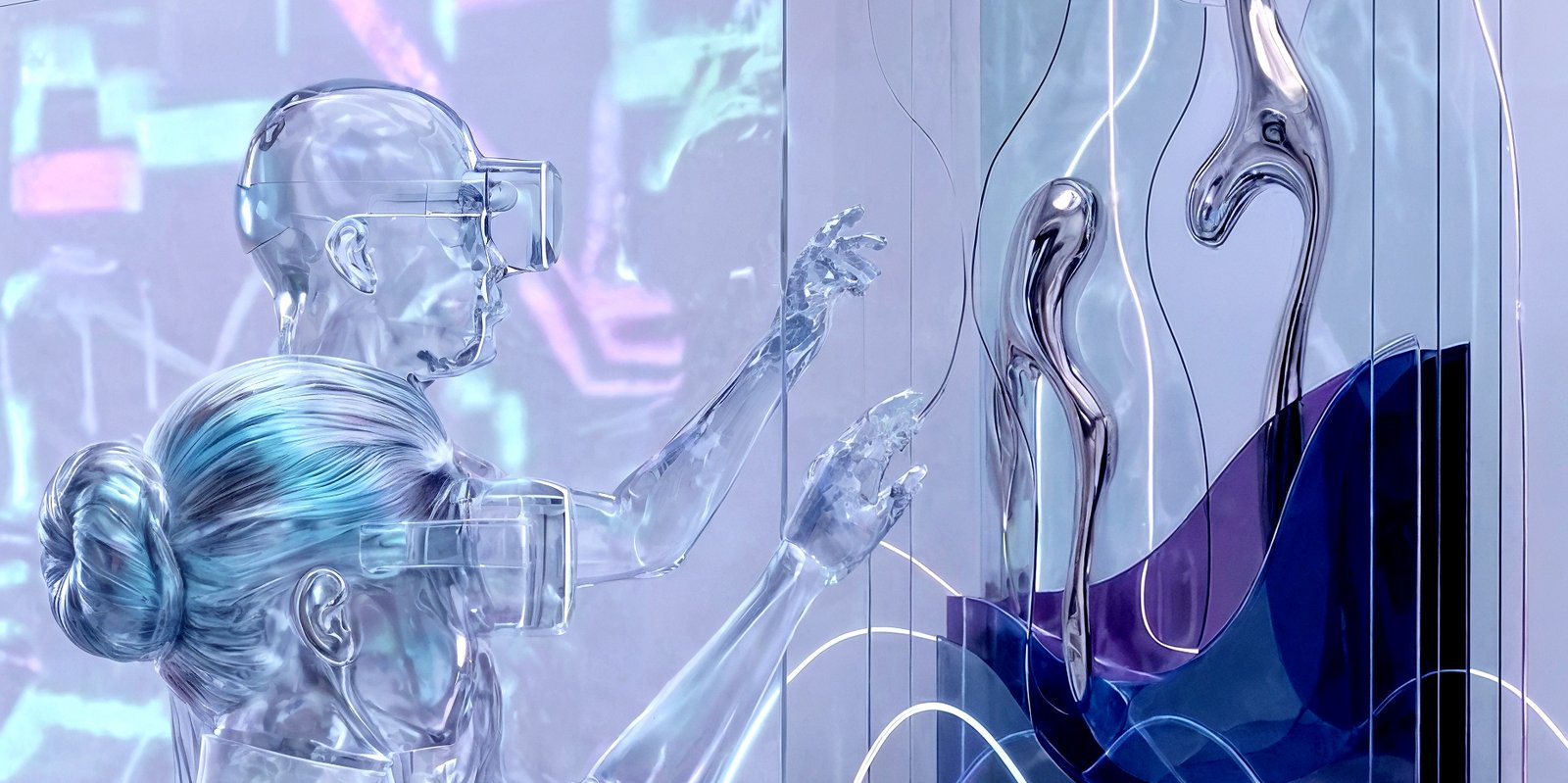
Anthropomorphism means attributing human characteristics to things, animals, or machines. Anyone who talks to a chatbot as if a human were on the other side is experiencing exactly that. The call for proposals asks: Where does technology become human, and where does the human become technological?
IUNO suggests possible approaches, but explicitly understands them as an invitation, not as fixed categories:
- Human Machines: the ELIZA effect, chatbots, and the humanization of technology
- Technologized Bodies: embodiment, the human as a data set, body tracking
- Human-Machine Relationships: AI companions and parasocial relationships
- Chimeras and Hybrids: composite beings and the merging of humans and technology
- Projection and Power: distortions (biases), mechanisms of obfuscation, power and influence
The ELIZA effect goes back to the program ELIZA, which Joseph Weizenbaum developed at MIT in the 1960s. Although it only processed simple text patterns, many users attributed understanding and emotions to it.
Which technique is the focus?
Under XR, the call for proposals includes Augmented Reality (AR), Mixed Reality (MR), Virtual Reality (VR), and projection-based 3D worlds. On the AI side, IUNO mentions, among others, Spatial AI, Embodied AI, Agentic AI, World Models, machine perception, algorithmic sensor technology, and multiplayer experiences in which humans and AI interact together. The project is being developed with the software Unity.
According to the call for proposals, concepts that utilize the immersive potential of XR to shape the public debate about the promises and risks of AI have particularly good chances. Technical prior experience is welcome. Basic knowledge in XR and AI is expected.
What does the fellowship offer?
- Support in refining the concept for the development phase
- close collaboration with the IUNO team, which brings experience in XR and AI development, user guidance, digital media production, storytelling, and project management
- insight into agile development methods
- a workplace at the Research Center for Culture and Computer Science at HTW Berlin
- state-of-the-art hardware and software
- scientific accompanying research and a professional article about the project
- a public networking event at HTW Berlin, where the finished project will be presented
The announcement does not provide information about a fee or a production budget. Those with questions can contact the IUNO team in advance via email.
Who can apply?
The open call is aimed at individuals and teams from visual arts, music, literature, performing arts, design, photography, and video art, as well as small businesses in the creative industries. A residence in Berlin is required. Additionally, IUNO expects:
- Basic knowledge of XR and AI technologies
- Openness to interdisciplinary collaboration
- Willingness to support accompanying research, for example through interviews or as a co-author
- Participation in approximately weekly meetings (except in August and September)
- Independent work in August and September
Experience with interdisciplinary cultural projects is desirable but not a requirement.
How does the application process work?
The application is sent by email to hi-iuno(at)htw-berlin(dot)de, in German or English, in font size 12. It includes:
- a motivation letter (maximum one A4 page)
- a concept on two to five A4 pages with at least one visualization, such as a sketch or a model; the use of AI should be described as precisely as possible
- an overview of the necessary work packages and responsibilities
- a short CV per person (maximum half an A4 page)
- for each team member a link to the website or a portfolio with relevant works
Application deadline
The application deadline is November 23, 2026, at 11 PM. The jury will decide at the beginning of January 2027, and all applicants will be notified by email.
What does the 2027 schedule look like?
- February to March: joint concept phase with storyboard, definition of digital content and detailed planning
- April: start of technical development
- May to October: step-by-step, agile development with Unity, user tests, accompanying research, troubleshooting and optimization
- August and September: independent work phase without weekly meetings
- November to mid-December: final touches, further user tests, completion and documentation
After completion, IUNO presents the project at a public networking event at HTW Berlin. The announcement does not yet specify a date for this.