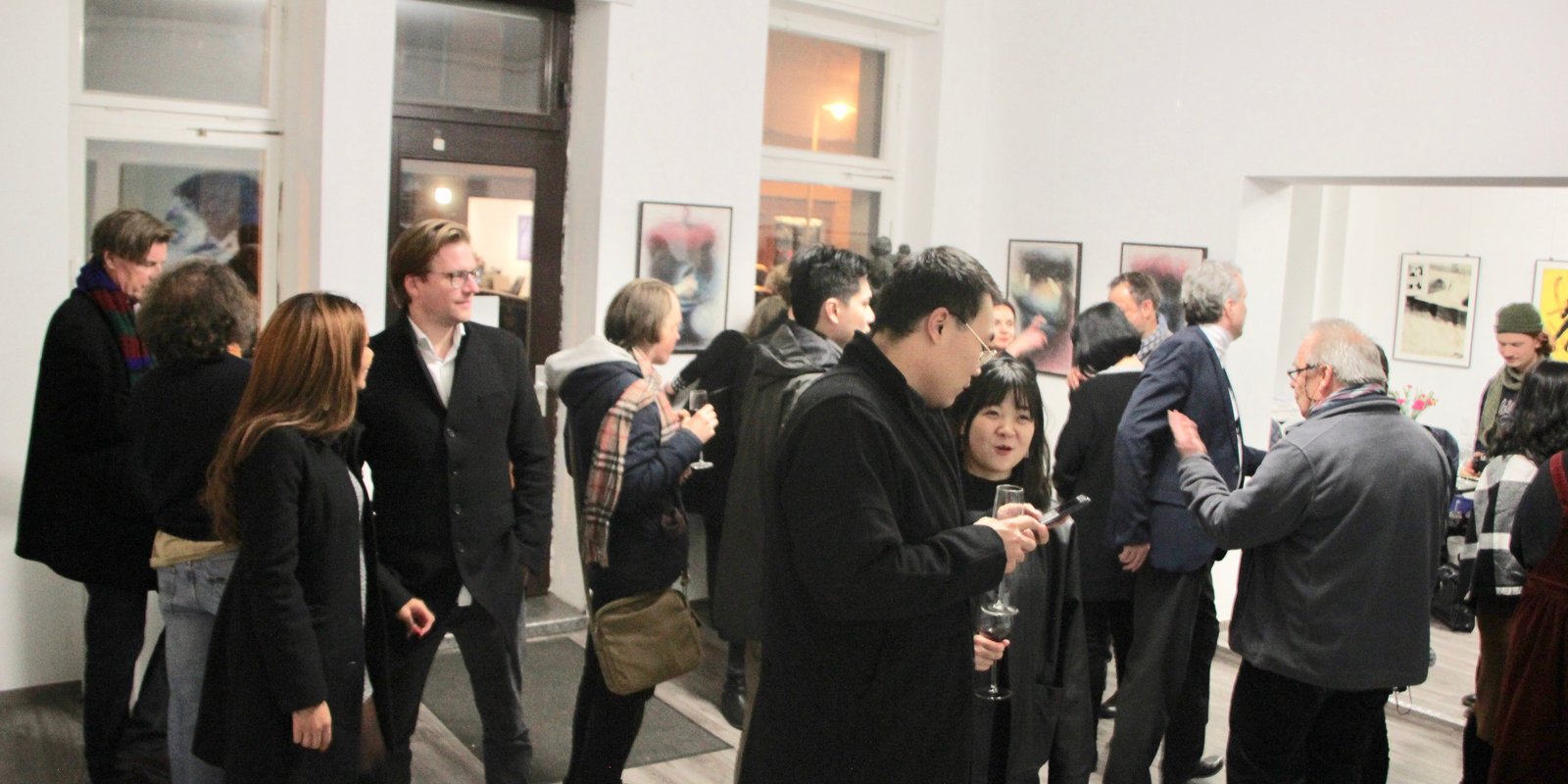
Why planning a visit to a gallery is possible
A gallery representation is the most important step in the career of many artists: The gallery showcases the works, finds collectors, negotiates prices, and builds the name over the years. How galleries select their artists often seems opaque from the outside. In fact, the art market follows recognizable rules – and knowing them early saves time, money, and disappointment.
This guide leads through the path to a gallery in 15 steps: from the different types of galleries to portfolio and application, to visibility, exhibitions, and online galleries. It is aimed at graduates of art schools as well as autodidacts, career changers, and newcomers.
The Essentials in Brief
- Galleries do not select based on quality alone: program, marketability, resume, and network also count.
- Apply specifically to galleries whose program fits your work – mass emails usually go unanswered.
- Smaller galleries and producer galleries are more realistic for entry than the big names.
- A compelling portfolio shows a cohesive body of work, not a collection of individual pieces.
- Personal contacts at openings, fairs, and open studios open more doors than any written application.
- Patience is part of it: A gallery representation rarely happens overnight.
Part 1: Understanding the Gallery Market
Step 1: Know the market for contemporary art
Since the pandemic, many people have redesigned their homes – and in doing so, discovered art for themselves. Collectors are looking for new positions, fresh perspectives, and independent styles. For artists at the beginning of their careers, this is an opportunity, but not a sure thing: the competition is fierce, and galleries are very selective about whom they take on.
To understand how to get into a gallery, one should first know what types of galleries exist and how they operate.
Step 2: Municipal galleries – Platform for the region
Municipal galleries are supported by cities, municipalities, or districts. They see themselves as part of the local cultural life and do not pursue commercial purposes. For artists, they offer:
- Exhibition opportunities for local positions: Many municipal houses deliberately showcase art from the region.
- Mediation and education: Tours, artist talks, and workshops engage you with the audience.
- Cooperations: Municipal galleries often collaborate with schools, universities, and other cultural institutions.
The decisive factor for an exhibition here is less about sales and more about the conceptual content. Therefore, an application should primarily explain what your work is about and why it fits into the house's program.
Step 3: Sales-oriented galleries – Partners in the art trade
Private, sales-oriented galleries are businesses: they thrive on selling artworks and receive a share of the sale price. Their tasks go far beyond sales:
- Selection: The gallery compiles a program of artists that fit their profile.
- Marketing: Openings, press work, catalogs, social media, and art fairs make the works known.
- Pricing and sales: The gallery advises collectors, negotiates, and handles sales.
- Artist management: They plan solo exhibitions, fair participations, and collaborations with institutions.
Here, in addition to artistic quality, the question of whether your works can be sold and whether there are collectors for them is crucial.
Step 4: Understand the gallery as a partner
A gallery representation is a long-term partnership. Gallerists usually work with only a small number of artists and invest time, money, and their reputation in each position. In return, they bring expertise, contacts with collectors, curators, and critics, as well as access to art fairs – up to major fairs like Art Basel, whose participation can significantly increase an artist's market value.
Because the gallery and artist are so closely linked, the personal level also plays a role in the selection: gallerists choose people they want to work with for years. Reliability and professionalism are therefore almost as important as the works themselves.
Step 5: The career ladder in the art world
Success in the art world rarely happens by chance. Comparing artists' biographies reveals a kind of career ladder: first exhibitions, grants and scholarships, smaller galleries, then larger galleries, fairs, institutions, and museums. Even seemingly sudden success is usually based on years of continuous work.
For your planning, this means: Set goals that match the current stage. Every exhibition, award, and publication becomes part of your CV and prepares the next step. Many successful artists have had mentors on this path – professors, older colleagues, or coaches – who explained the unwritten rules of the art world to them.
Step 6: What a gallery program is
The gallery program is the list of artists that a gallery permanently represents. It is the gallery's showcase: it shows what they stand for in terms of content, which media and styles they represent, and which collectors they appeal to. A good program is curated – the positions complement each other without competing.
This leads to an important insight for your application: A gallery only takes on those who meaningfully complement their program. Even very good works are rejected if they do not fit the profile or if the program is currently full.
Part 2: Applying to a Gallery
Step 7: Research Suitable Galleries
The most common mistake is applying to galleries that do not fit your own work. Therefore, research thoroughly:
- Which artists does the gallery represent, and what media and styles does it showcase?
- In what price range does it operate, and at which fairs is it represented?
- Does the gallery even accept applications – and if so, in what form?
Visit the exhibitions of the galleries you are interested in and get to know the program before you apply. An application that shows you have engaged with the gallery stands out clearly from mass emails. What matters in the search for a long-term collaboration is also described in our article Artists Looking for a Gallery.
Step 8: Utilize Producer Galleries and Guest Exhibitions
Producer galleries are run by artists themselves. They are often more accessible for entry than commercial galleries and regularly invite guest artists for solo or group exhibitions. An example is the Berlin Produzentengalerie, which also explains on its website how to apply as a guest artist.
Guest exhibitions provide initial entries in the exhibition list, contacts with collectors, and experience in the exhibition business. Clarify in advance what costs will be incurred and what services – such as press work or invitations – the gallery will cover.
Step 9: Start Small and Convince Galleries
Renowned galleries receive far more inquiries than they can handle. Many applications via email, contact form, or social media therefore go unanswered. A more realistic entry is through smaller galleries: they are more open to new positions, and good collaboration there is the best recommendation for the next step.
A rejection often says nothing about the quality of your work. Often the gallery simply already represents enough artists, or your work does not fit into the current program. Climb the career ladder step by step instead of betting everything on one big leap – and remain persistent: contact by contact, exhibition by exhibition.
Step 10: What Galleries Want to See in an Application
The quality of the works is only part of the decision. Gallerists look at the overall picture – and whether your art finds buyers. A complete application includes:
- Portfolio: 10 to 20 current works in very good photo quality, ideally a cohesive series of works. Collectors often buy entire work groups; a coherent series shows that you have developed your own signature.
- Artist Statement: a short, understandable text about your work, your themes, and your working method.
- Artistic CV: Education, exhibitions (separated into solo and group exhibitions), fairs, awards, scholarships, and acquisitions.
- Work List: Titles, year, technique, dimensions, and prices of the works shown.
- Evidence of Resonance: Press reports, reviews, previous sales, and – if available – a relevant presence on social media.
Tailor each application to the respective gallery. For gallerists, exhibitions in galleries and institutions as well as fair participations are particularly important; exhibitions in cafes or doctor's offices, on the other hand, hardly convince them.
Part 3: With or Without Art Studies
Step 11: Using the University's Network as a Graduate
Those who have studied at an art college or academy – with a diploma or master's degree – have a clear advantage: the network. During their studies, students meet established artists, gallery owners, curators, critics, and collectors, for example, during tours and annual exhibitions. Professors often directly recommend their best students to galleries.
This does not automatically ensure a successful career. However, you know the conventions of the art world and know which doors you can knock on. Actively maintain these contacts after graduation.
Step 12: Entering a Gallery Without Studying – Building Contacts Strategically
Self-taught artists, career changers, and hobby artists also find their way into galleries. The lack of an academic background can be compensated for if you build your network yourself:
- Get added to galleries' mailing lists to learn about exhibitions and calls for submissions.
- Follow galleries on social media and comment with interest and professionalism.
- Attend openings, art fairs, open studios, and art nights – and engage in conversations with gallery owners, artists, and collectors without immediately presenting your portfolio.
- Apply for calls for submissions, art prizes, and residency programs to strengthen your resume.
Professionalization also involves organizing your work like a profession: a coherent artistic concept, a well-maintained portfolio, basic knowledge of marketing and sales, knowledge of funding opportunities, and realistic planning. Coaching and part-time further education can help with this (see note at the end of the article).
Part 4: Visibility, Exhibitions and Online Galleries
Step 13: Becoming Visible Online – With Caution
A personal website is the business card on the web: It showcases your profile, your best works, your resume, and your contact details. Added to this are social networks like Instagram or Pinterest, as well as artist platforms where you can share your work and connect with other artists and interested parties.
There is one point that many guides overlook: Galleries do not like it when artists sell their works cheaper on their own website or in the studio. Low prices in your own online shop later undermine gallery prices. Therefore, design your appearance in a high-quality manner, ensure consistent pricing, and consider whether your own shop fits your goals. Also, carefully review the costs and conditions of art portals before signing up.
Step 14: Planning Exhibitions and Marketing Vernissages
At the beginning, galleries are often not accessible. Many artists therefore exhibit in cafes, restaurants, medical practices, hotels, companies, or pop-up spaces. This brings your work to an audience – but it is not yet art marketing. In these places, no one takes on the work that a gallery does: invitations, press work, contacts with collectors, and sales talks. Friends and acquaintances are happy to come to the opening, but only buy to a limited extent.
If you exhibit yourself, plan the vernissage like a gallery:
- Define goal and target audience: Who do you want to reach – collectors, press, gallery owners?
- Build an invitation list and personally invite important contacts.
- Develop a consistent appearance for invitations, posters, and online announcements.
- Use social media and event calendars to announce the vernissage.
- Invite local press and blogs and provide a short press release with images.
- Plan space and hanging carefully: Light, distances, and order of works shape the impact.
- Be present: Talk to your guests, explain your work, and have a list of works and prices ready.
Step 15: Online Galleries – Opportunities and Limitations
Online galleries and art platforms have expanded the art market. They are accessible around the clock, lower the threshold for buyers who would not enter a traditional gallery, and make works visible internationally. Even in the mid-price segment, many collectors today buy online.
For artists at the beginning of their careers, online galleries also have limitations:
- High competition: Countless new works are added daily, individual pieces can easily get lost.
- Little marketing: The platform displays your works, but active marketing usually remains with you.
- No representation: Physical exhibitions, fair participation, and real gallery representation are missing – and with them important entries in your resume.
- Unknown name: Collectors often search online specifically for names they already know.
Online galleries are therefore a useful addition but do not replace building contacts and exhibitions in the real art world.
Conclusion: With strategy and patience into the gallery
The path to a gallery is not a coincidence, but the result of many small steps: understanding the market, finding suitable galleries, creating a compelling application, maintaining contacts, and gradually building your own resume. We often overestimate what is possible in one year – and underestimate what can be achieved in five years.
Focus on your work, develop an independent body of work, and remain present where the art scene meets. Then the chances are good that a first conversation at an opening will one day turn into gallery representation.
Note: Further training and coaching
The Berlin gallerist Diana Achtzig has been advising artists since 1990, according to her own statements. Under the name "Art up Coaching," she offers artist coaching, including the revision of portfolios and application documents.
The Achtzig Kunstakademie Berlin offers a part-time distance learning program in Fine Arts and Painting with a diploma and master student degree from the academy – for anyone seeking artistic training alongside their profession.
Further tips on the topic can be found in the "Kunst verkaufen" podcast, for example, in the episode "Inclusion of Your Artworks in Galleries".