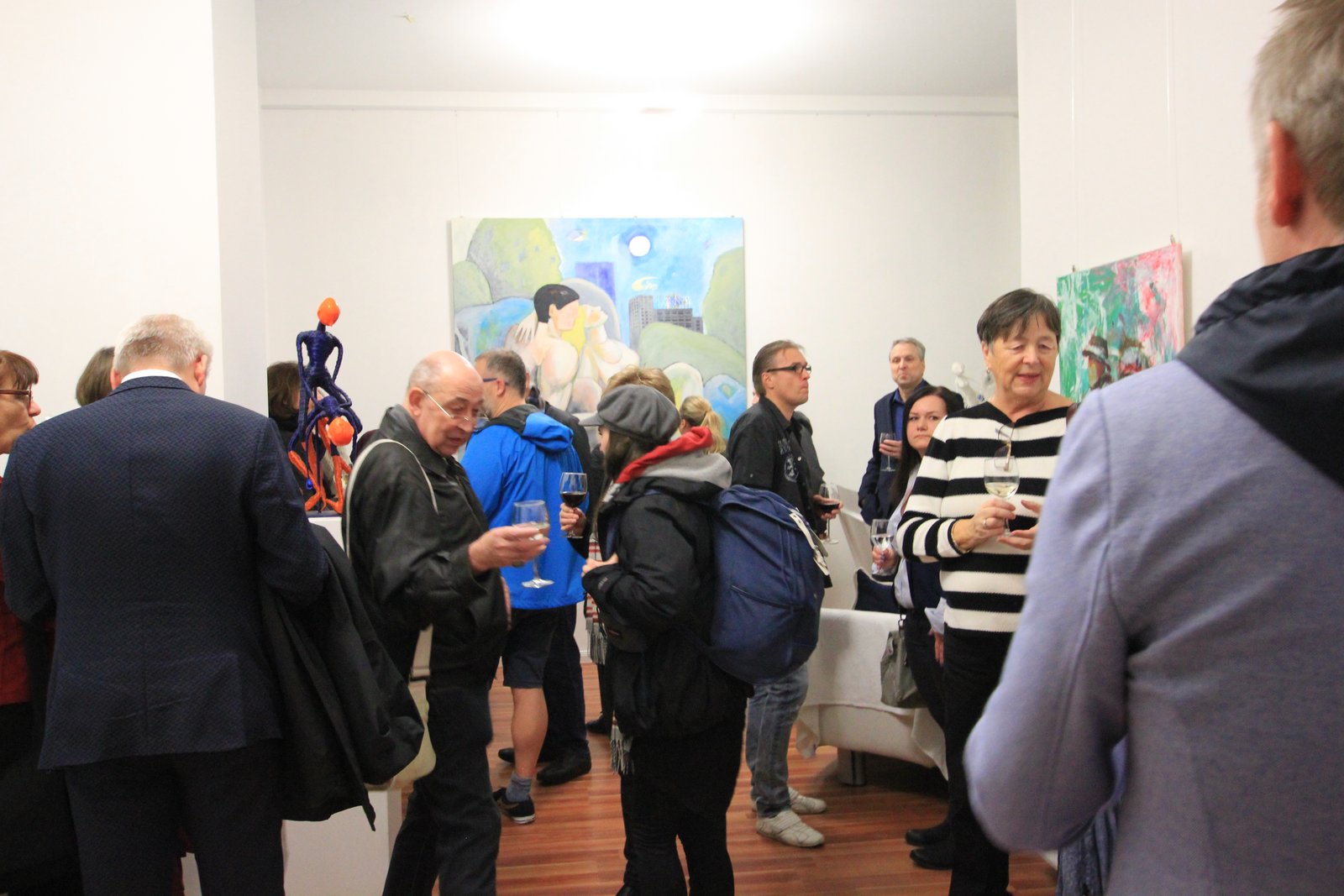
Why artists need a gallery
Art school graduates and talented career changers alike often search for a long time for a gallery to represent them. Many first try to sell their work themselves, for example on social media. That does not always work, because trust plays a big role in buying art. Buyers like to rely on the judgement of a gallery that has supported an artist with exhibitions over the years and knows its collectors.
Key points at a glance
- Galleries build trust between artists and collectors and sell art over many years.
- What counts is a targeted choice of suitable galleries and a personal application.
- Artist-run galleries, municipal galleries and online platforms offer further exhibition opportunities.
- Art studies are not a must, but they can strengthen your position, contacts and experience.
How to find the right gallery
Not every gallery suits every artistic position. Take a close look at the programme: which artists does the gallery represent, which techniques and themes does it show? Visit exhibitions and openings to get to know the gallery and its audience.
Apply in a targeted, personal way instead of writing to many galleries at once. A good application contains a small selection of strong works with details on technique and size, a CV listing your exhibitions and a short text about your work. Check whether the gallery accepts applications at all and in what form. How to make yourself visible as an artist is covered in the article Self-marketing for artists.
Artist-run galleries as a way in
Artist-run galleries, called Produzentengalerien in German, are supported by the artists themselves. The members organise exhibitions together and often share costs and tasks. For newcomers they offer the chance to exhibit regularly in real gallery spaces and gain experience with audiences and sales.
In Berlin, for example, the Berlin Produzentengalerie in Prenzlauer Berg accepts artists from Germany and abroad, from painting and drawing to sculpture. How to apply there is described in the article The Produzentengalerie Berlin is looking for artists.
Municipal galleries and online platforms
Municipal galleries are another option. In Berlin, the districts run their own exhibition spaces, often publicly funded, which award exhibitions through open calls or applications. Whether and when someone exhibits is decided by the curators in charge. Galleries in neighbourhoods or companies, such as the Degewo Hochhaus Galerie in Marzahn, also regularly show art from the region.
Online galleries and sales platforms without physical spaces can be a useful addition for showing work to a wider audience. They rarely replace personal contact and seeing art in a real room, though.
Art studies as a foundation
A degree is not a requirement for an artistic career, but it can help: it sharpens your artistic position and brings contacts with teachers and fellow students as well as first exhibition experience. If you already work, you can also study alongside your job, for example through distance learning at the Achtzig Kunstakademie in Berlin, which offers courses including fine art painting and fashion design. Read more in the article Studying art alongside a career.
To apply to art schools and academies you usually need a portfolio of your own work, often around 20 pieces depending on the school. All works must be your own, and an entrance exam often checks this as well. Which mistakes to avoid with your portfolio is shown in the article Portfolio for art studies: 10 mistakes you should avoid.