The fall of the Berlin Wall as a motif
On November 9, 2019, the fall of the Berlin Wall marked its 30th anniversary, followed by the reunification a year later. For many people, especially in East Germany, the fall of the Wall was a turning point with enormous significance. The images of jubilant people pouring into freedom went around the world and are firmly anchored in the collective memory.
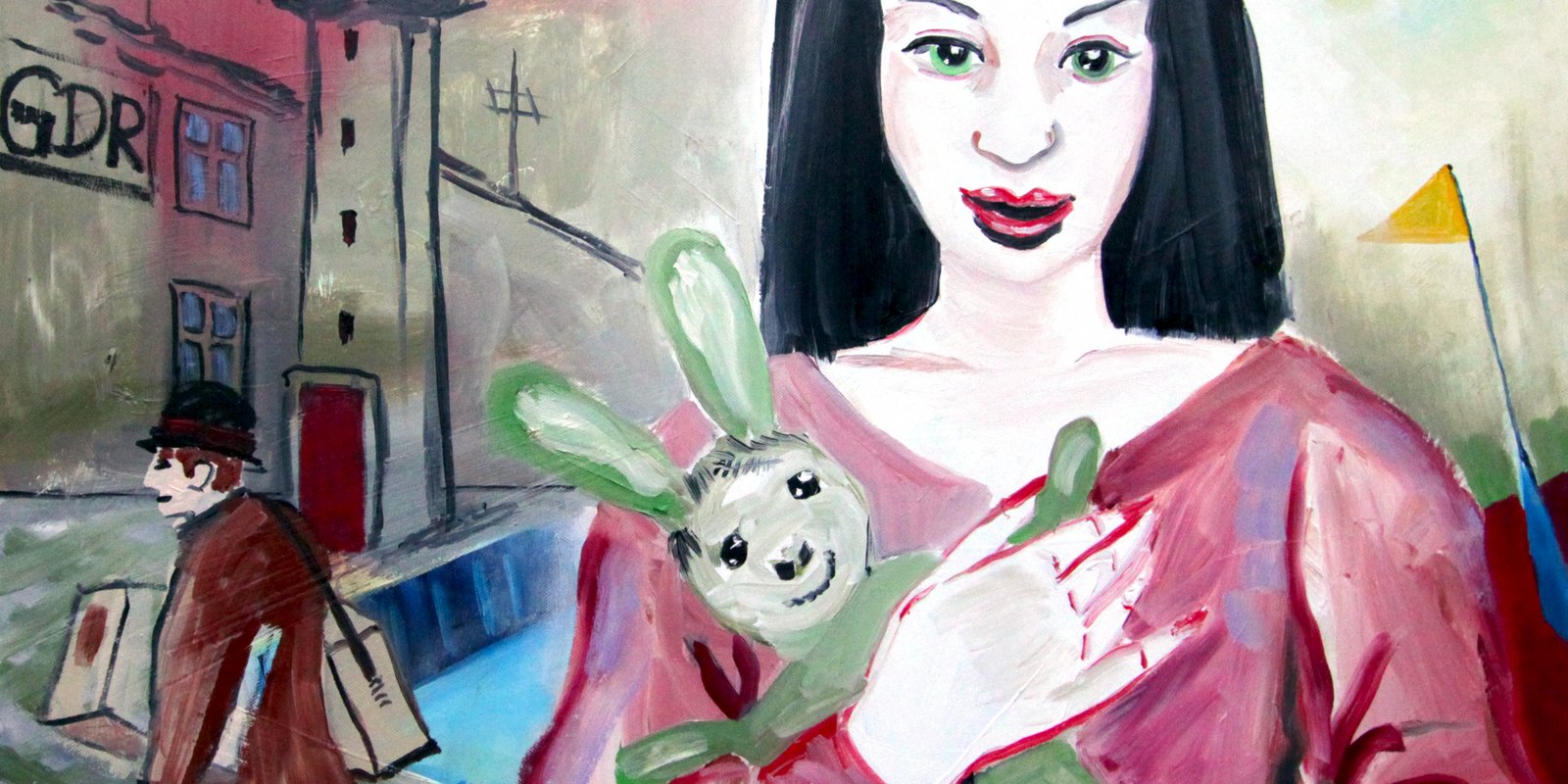
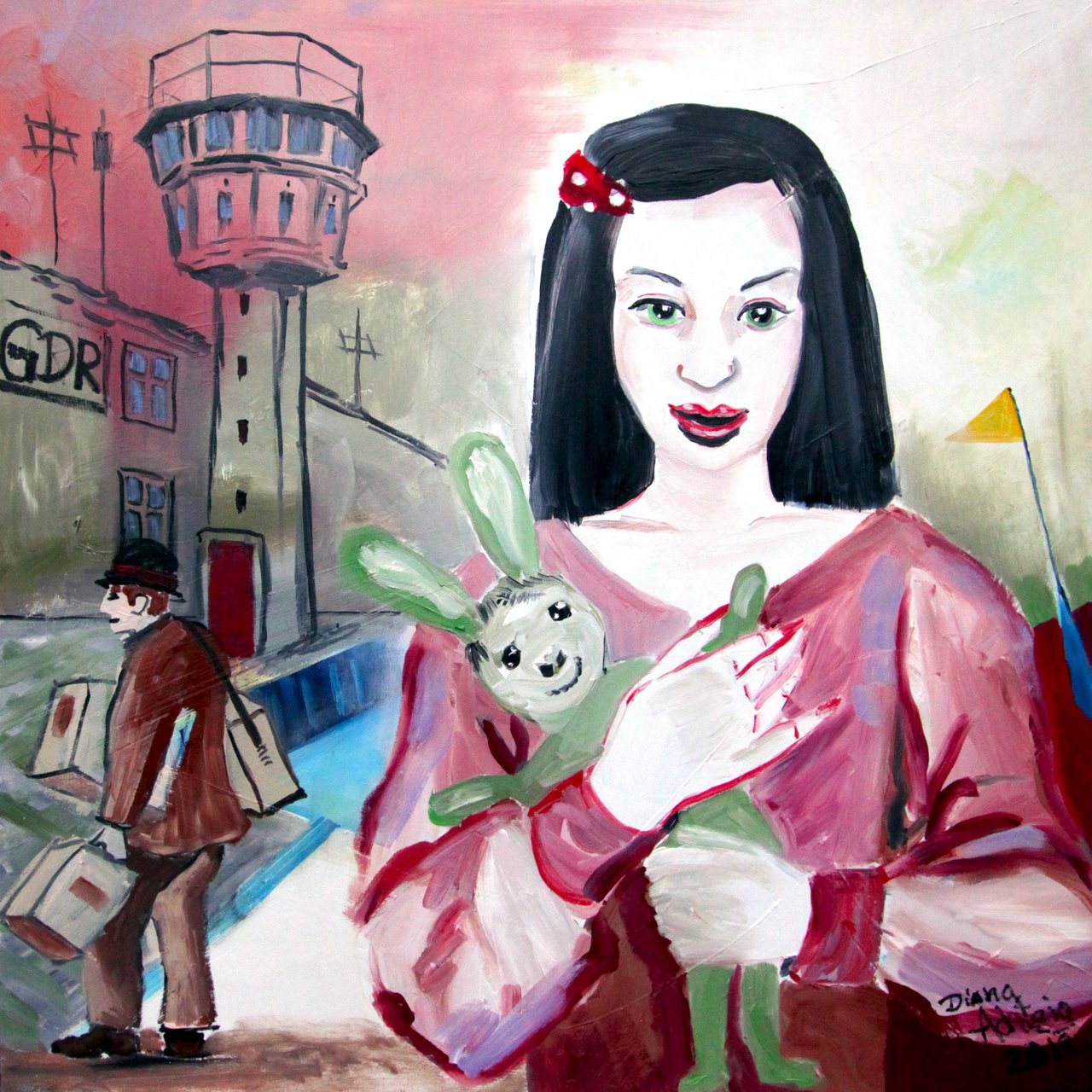
The historical moment has inspired countless artists, including the Berlin painter Diana Achtzig. Her paintings "30 Years of Reunification and the Fall of the Wall" (oil on canvas, 80 × 80 cm, Berlin 2018) and "The Fall of the Wall on November 9, 1989, CNN Reports on It First" (oil and egg tempera on canvas, 70 × 50 cm, Berlin 1989–2017) capture the moment when people in the GDR were freed from the dictatorship of the SED regime.
The Essentials in Brief
- Diana Achtzig grew up in East Berlin and processes the GDR era in figurative oil paintings.
- Her Wall Fall paintings show hope, her Stasi paintings surveillance and threat.
- She is considered the founder of the "Berlin School" of painting.
- Role models are painters of the Leipzig School like Willi Sitte and Arno Rink.
Images Full of Hope
The fall of the wall images are life-affirming and full of hope for a better future. Collectors from the USA, Great Britain, Belgium, and the Netherlands are particularly interested in these wall images and the painted watchtowers because they capture the historical moment. However, the artist has not only dealt with the emotional climax of German history but also with the dark sides of the GDR. Art historically, her paintings refer to Julian Schnabel and Georg Baselitz.
Grew up in East Berlin
Diana Achtzig was born in East Berlin and grew up in divided Germany. According to her own statement, she personally experienced the pressure of the Stasi and the machinations of the SED regime, and the secret police of the GDR intervened in her environment as well. She processes this past in her paintings. [14]
After the fall of the Berlin Wall, Diana Achtzig moved to Amsterdam and founded her first own gallery there. She attracted collectors as well as a young, student audience. From this environment emerged a new art movement, the Berlin School. Diana Achtzig founded the style, which includes figurative and abstract works by certain graduates of the Berlin University of the Arts from the classes of 1998 and 1999, represented by the Achtzig Galerie. In addition to Diana Achtzig herself, who graduated from the UdK in 1999, Anton Van De Amoste, Ashley Grik, Emilia Blauzweig, Heike Huismann, and Kathleen van Sterge are also included.
The Berlin School of Painting
The Berlin School focuses on the poetry of the moment. The artists strive to capture fleeting moments, in the spirit of Goethe's Faust: "Stay awhile, you are so beautiful!" At the center is the metropolis of Berlin with its own, turbulent rhythm. The city also serves as a backdrop to make contemporary history visible. Thus, the images document the change of history and become historical witnesses themselves.
Several publications are dedicated to the Berlin School, such as the book "The Museum of the Berlin School of Painting and the Art of Diana Achtzig" [1] by Barrie von Ashburner and Diana Achtzig, as well as "Oil Painting in Contemporary Art and the Berlin School" [2] by Tanja Steinlechner and Diana Achtzig.
The positions of the Berlin School were first presented in solo and group exhibitions at the Amsterdam Gallery. In 2009, Diana Achtzig returned to Berlin and opened the Achtzig Galerie für zeitgenössische Kunst in Prenzlauer Berg. In 2016, a museum of the Berlin School followed at Hagenauer Straße 7. It showcased young and established artists of the Berlin School and the New Leipzig School in a permanent exhibition, whose works could also be purchased.
DDR and Stasi images as historical documents
In addition to her work as a gallerist and curator, Diana Achtzig has always remained an artist, connected to the program of the Berlin School. Contemporary history is always present in her works: sometimes hinted at by the changing metropolis as a backdrop, sometimes very concretely through specific historical events.
Her GDR and Stasi images are historical documents and at the same time very personal works of great emotional power. The artist is interested in individual fates swept away by the tide of history and in the ruptures in people's biographies. The intimate and at the same time political nature of these images comes from her own biography and the traces left there by the SED dictatorship.
Surveillance and Threat in the Image
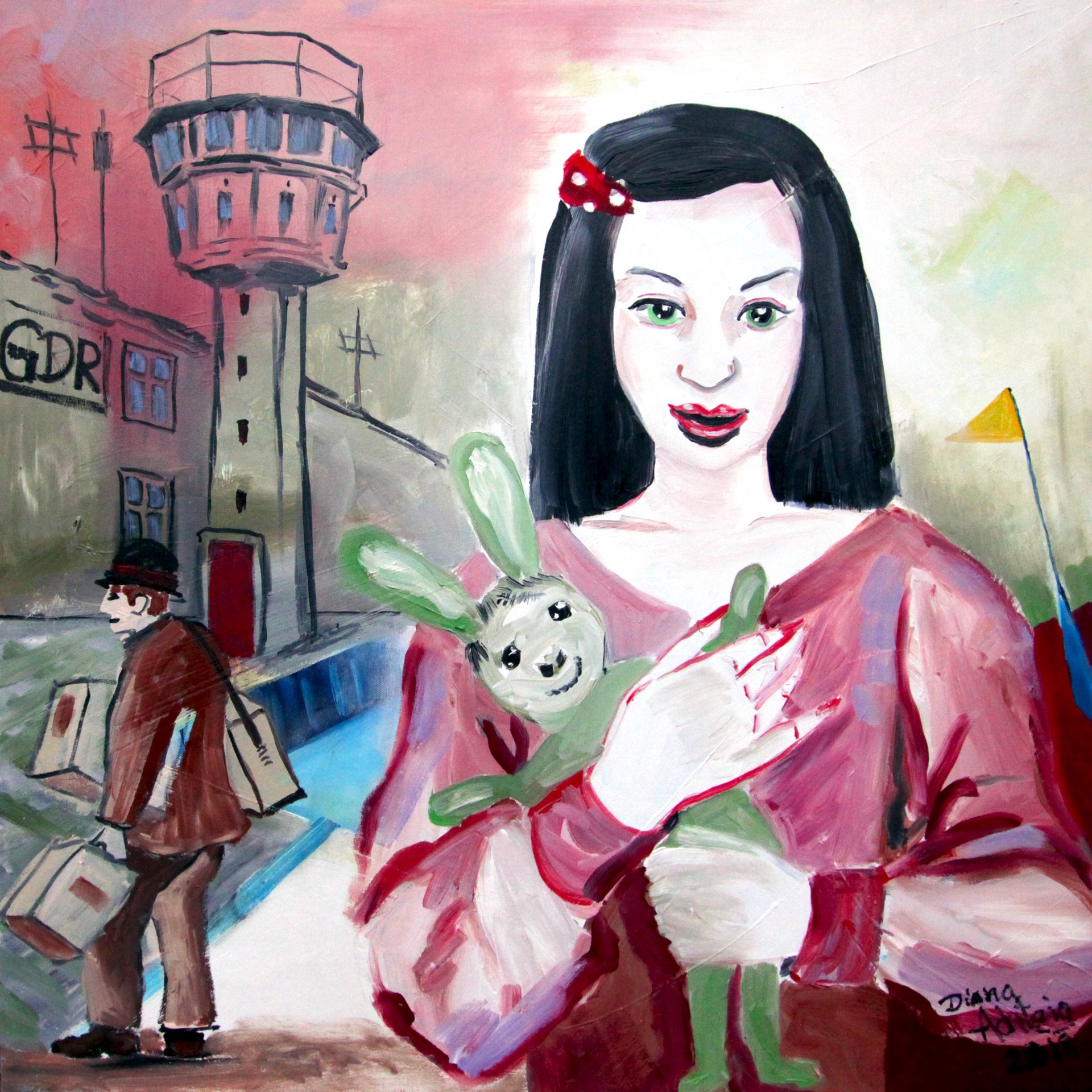
Especially for female artists, writers, and all nonconformists, life in the GDR was difficult and dangerous. Criticism of the regime could have serious consequences. The Stasi deployed spies everywhere, and even among friends or within one's own family, no one was safe from betrayal. Eavesdropping was part of everyday life, bugs could even be hidden in stuffed animals, and like a sword of Damocles, the threat of political imprisonment, such as in Bautzen prison, loomed over the people.
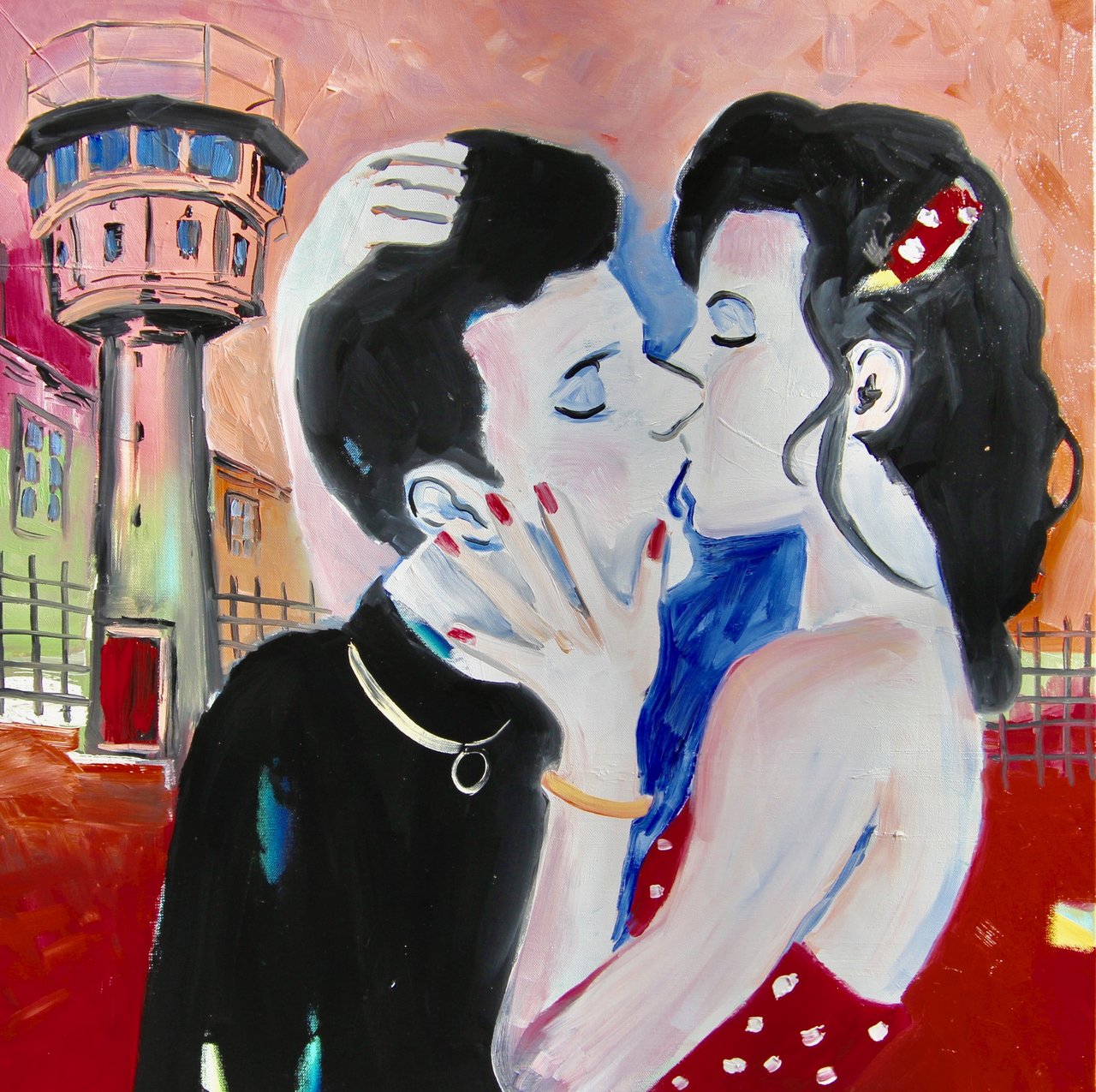
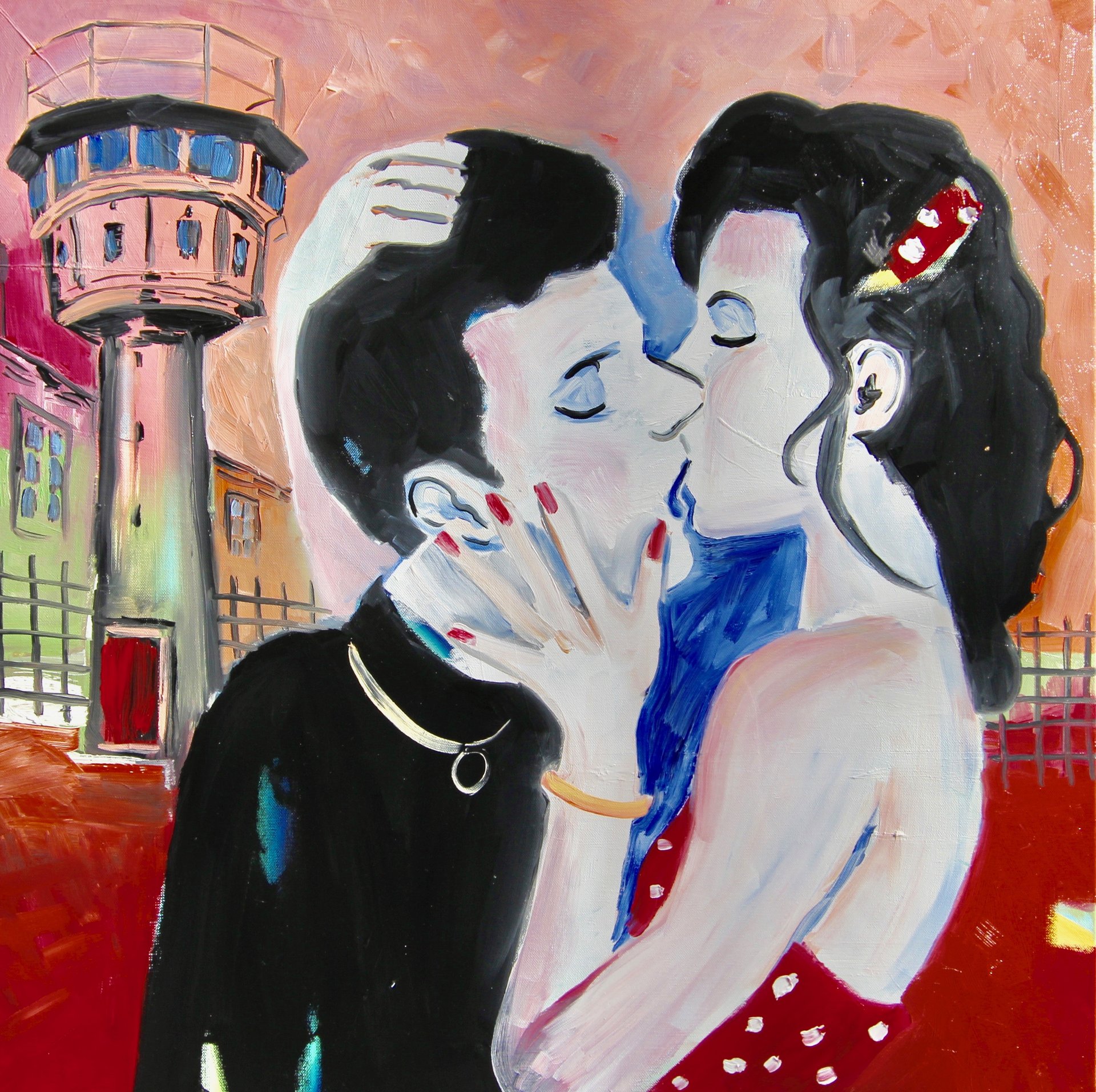
Diana Achtzig's GDR and Stasi paintings make this atmosphere tangible. Human feet protrude from under trees, snowmen have eyes that miss nothing, antennas capture every word. Border towers, high stands, and Stasi villas loom threateningly, as symbols of control, power, and inequality. Sometimes the artist stylizes Stasi employees as mythical creatures with devil horns, meeting in witch houses or under the cover of night, or blending unnoticed among people at a lantern festival. Mythological figures like Lucifer and Baphomet also appear.
The series also depicts people who resisted the system and attempted to escape. The focus is always on the people and their emotions: longing, romance, and couples in the web of society and history. The physicality of the figures and the lively brushwork counterbalance the strictly geometric, cubist structure of their pictorial spaces.
Role models from Leipzig
The paintings not only contain the horrors of the GDR but also artistic influences from that time. The painting style shows references to the Leipzig School and New Objectivity. The artist dedicates painted tributes to Willi Sitte (1921–2013), known for his powerful worker figures, and Arno Rink (1940–2017), one of the most important representatives of the Leipzig School. Some of these paintings were created in classes with Alex Bär (born 1967), an artist of the New Leipzig School, who himself studied under Arno Rink.
The individual paintings are discussed in detail in the book "The Museum of the Berlin School of Painting and the Art of Diana Achtzig". In 2019, Diana Achtzig exhibited her paintings in the exhibition "30 Years of the Fall of the Wall" at the Leipzig branch of the Stasi Records Archive, as reported in the article about her exhibition at the Unfallkrankenhaus Berlin. You can read more about her painting in the article Buying Art by Diana Achtzig: What Distinguishes the Painter of the HGB Leipzig.