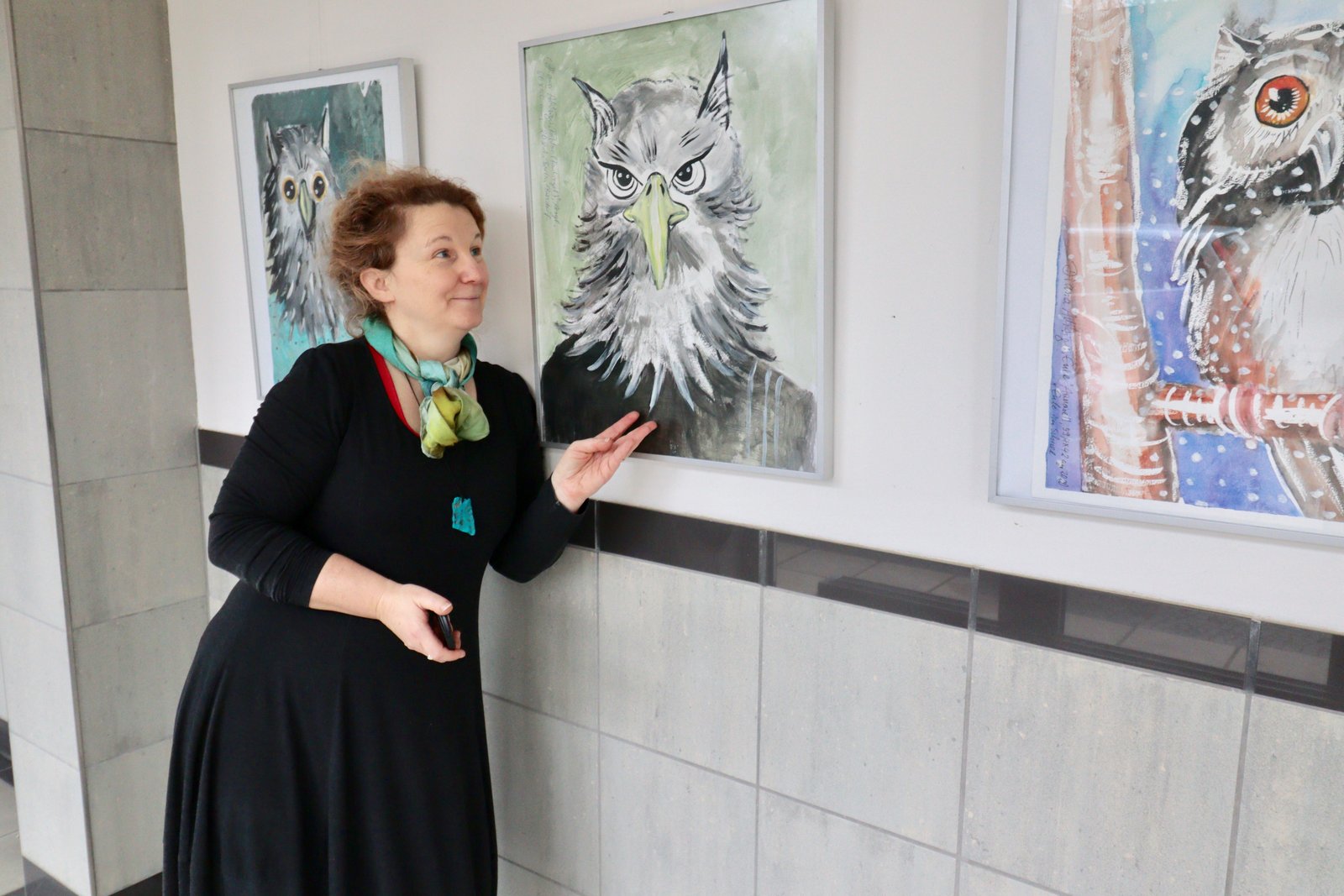
The exhibition: 28 paper works about the lockdown
At the start of 2021, the Degewo Hochhaus Galerie showcased a solo exhibition by Diana Achtzig: 28 figurative to slightly abstract animal and human images in acrylic and watercolor on paper. The trained painter has also been working as a gallery owner in art marketing since 1990.
The Essentials at a Glance
- The exhibition ran from January 13 to March 31, 2021, at the Degewo Hochhaus Galerie in Berlin-Marzahn.
- Diana Achtzig presented 28 paper works featuring chimeras of animals and humans.
- The images process the Corona lockdown: identities blur, humans merge with animals.
- Many motifs are based on black-and-white photos of her family, including her grandfather, a resistance fighter.
Video of the exhibition
Contemporary history as a pictorial theme
As early as 1990, in her first own gallery in Amsterdam, Diana Achtzig combined personal experiences with contemporary history in acrylic and egg tempera paintings as well as oil paintings. Later, she taught art history as a lecturer. Social memory and art history continue to flow into her complex, suggestive images, carried by an intense play with color.
Corona lockdown: Identities blur
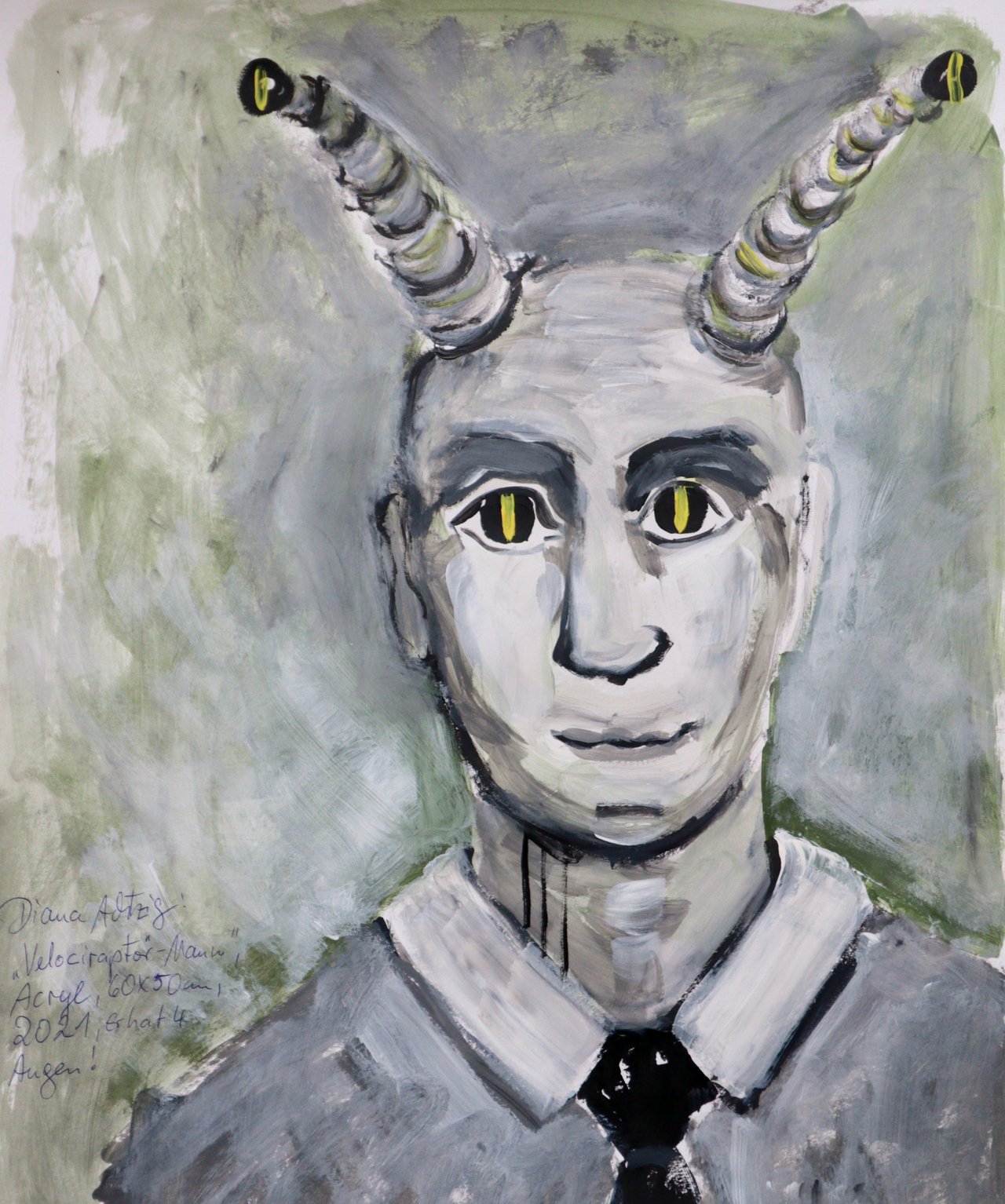
In her new paintings, abstraction gained weight. Diana Achtzig partially scraped off the vigorously applied paint from paper and canvas. Thus, the identities of the figures blur beyond recognition.
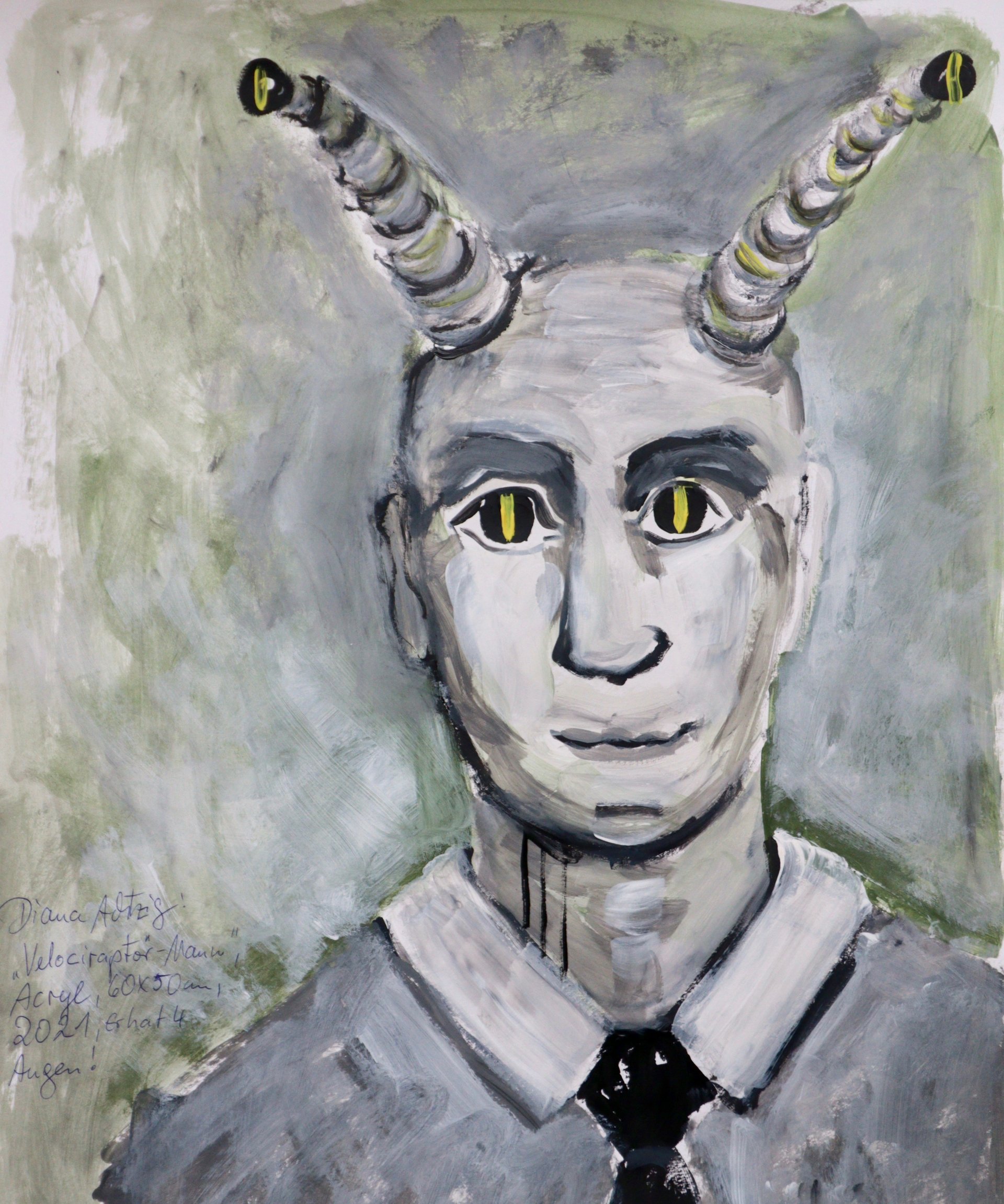
The lockdown triggers strange transformations in people, which the artist interprets as chimeras of animal and human: people merge with their pets, violence against women and children increases, in some the animalistic takes over, peaceful citizens become chaotic. Genders blur and merge into new identities. The exhibition emerged from these thoughts.
Deconstruction in Painting
The scraping of paint loosely aligns with deconstructivism. In philosophy, Jacques Derrida founded deconstruction, a method of dismantling meanings. It was adopted in literary and cultural theory, and Judith Butler applied it to gender theory, questioning constructed gender identities. In architecture, deconstructivism refers to the dismantling of structure and form and their reassembly.
In Diana Achtzig's painting, the dismantling enhances abstraction. Her figures display great diversity and bear injuries, scars, and fractures in biography and career as naturally as their Corona masks.
Family photos and a resistance fighter
Many motifs go back to black-and-white photos of the Achtzig family. Her grandfather Max Konrad Achtzig, born in Warsaw, owned a large farm in Eiche near Berlin, on the site of today's allotment garden at Ahrensfelder Berg. He furthered his education in the library in Ahrensfelde and taught himself to play the violin. As mayor, he was later entrusted with dividing the land reform land in Eiche.
The resistance group Anton Saefkow
According to the family history, Konrad Achtzig was a member of the resistance group around Anton Saefkow as a communist and secretly delivered the group's mail as a courier. At great personal risk, he hid three Jewish families in his attic and supported them at his own expense as a fishmonger throughout the war. He was repeatedly suspected, there were house searches, and he was temporarily imprisoned in a concentration camp. At the request of his wife Frieda, a member of the group got him out again. After the war, he and his wife received a pension as victims of Nazi persecution (VdN).
Later, he moved within Eiche to Ruhrstraße. After his death, there was a dispute over his land and that of farmer Möser. Both families received it back through a court ruling.
Animal humans with technology
The fusion of animal and human has occupied Diana Achtzig since the beginning of her exhibition activities around 1990. Later, she expanded the motif with technical improvements. This resulted in cohesive series of images on canvas and paper. A later example is the leopard hare as a symbol of personal development.
No "beauty ideal à la Instagram"
In Diana Achtzig's transhumanism, chimeras of animal and human are enhanced through artificial intelligence, robotics, and implants. Who doesn't dream of better hearing, sharper vision, or even eternal life? Digitality promises such possibilities. The artist does not follow an "Instagram-style beauty ideal," but rather questions the limits of technology and research. As an author, she also writes about digitality, AI, and virtual reality.
Conclusion
The exhibition depicted a time that went off the rails during the second Corona lockdown: identities and gender boundaries blur, violence grows in relationships. At the same time, the crisis brings a push towards digitality and artificial intelligence. Can transhumanism produce an improved version of humans, as a chimera of animal, human, and technology? This question was posed by the images.
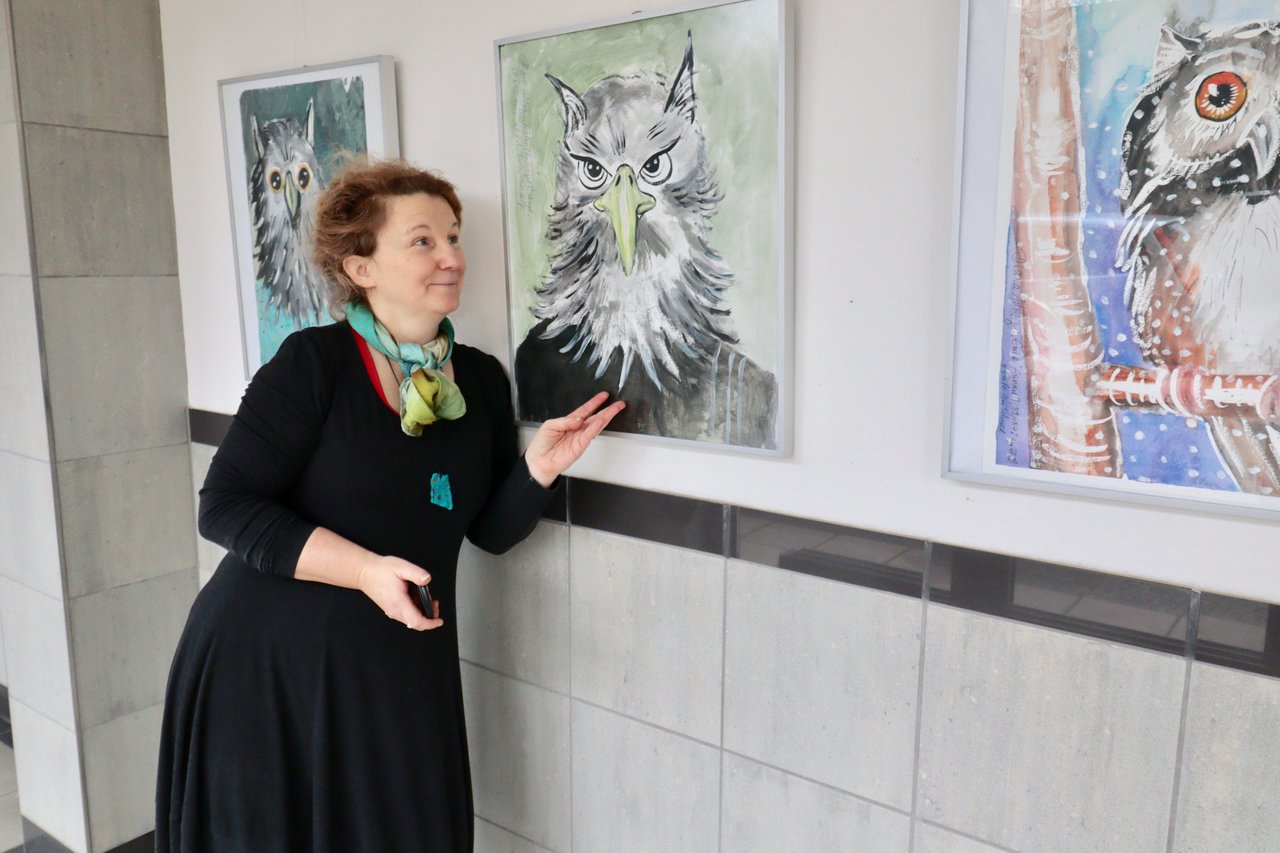
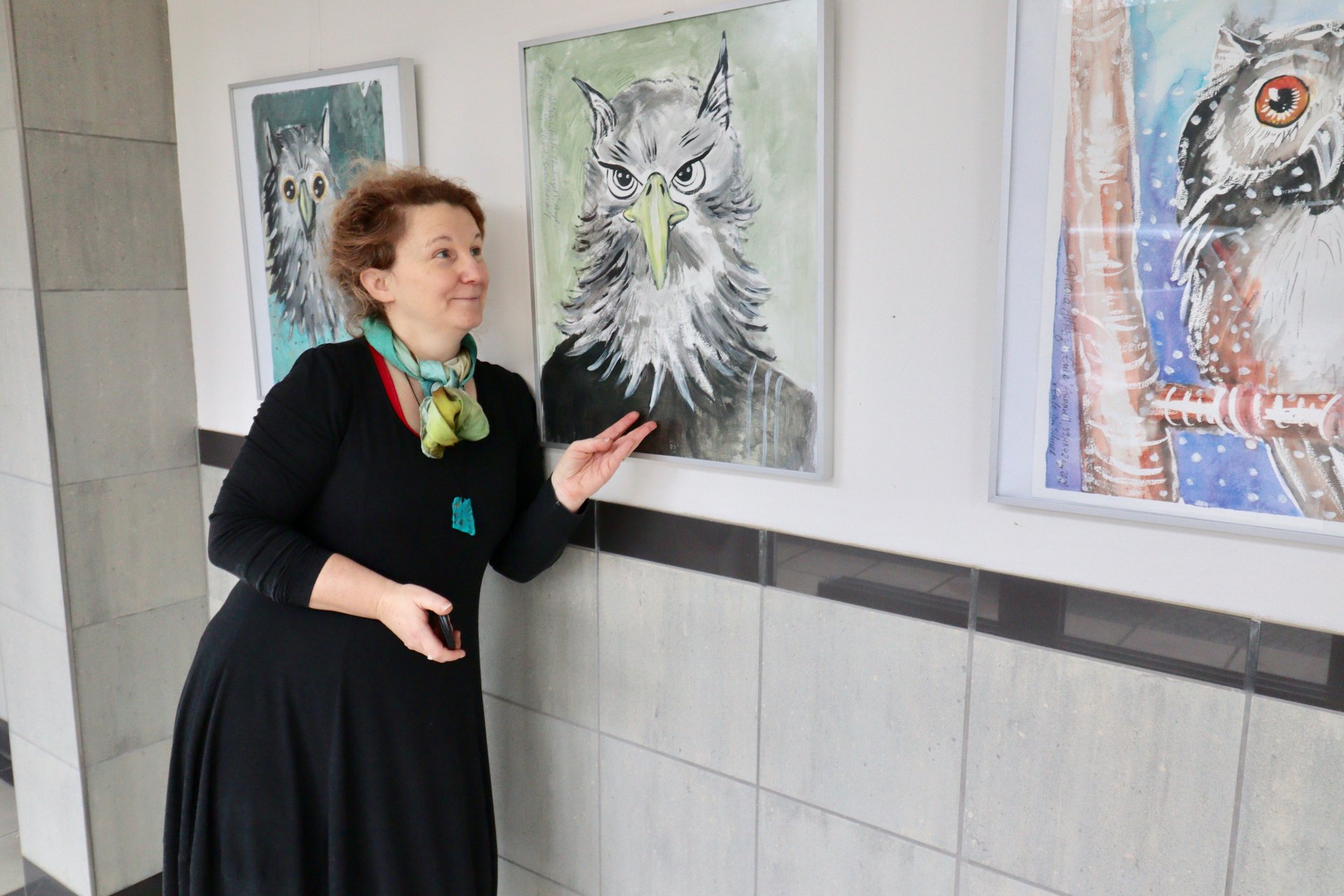
Short biography: Diana Achtzig
As a gallery owner, painter, and sculptor, Diana Achtzig has developed art marketing for her Achtzig Galerie für zeitgenössische Kunst and the Berlin Produzentengalerie both domestically and internationally. After her studies at the Universität der Künste Berlin, she took lessons from artists of the New Leipzig School: with Alex Bär, who studied at the Hochschule für Grafik und Buchkunst Leipzig under Neo Rauch and Arno Rink, and with graphic artist Steffen Wilbrandt, a student of Bernhard Heisig. More on this in the article What distinguishes the painter of HGB Leipzig.
Since April 2020, Diana Achtzig has been the gallery owner of the Degewo Hochhaus Galerie and is developing art marketing there for the exhibiting artists.
The Degewo High-Rise Gallery
The exhibition was on display from January 13 to March 31, 2021, in the foyer of the Degewo Skywalk, Raoul-Wallenberg-Straße 40/42, 12679 Berlin. Further exhibitions by Diana Achtzig in the gallery: her first solo exhibition and animal portraits from photos and sketches.