A label with success
Hardly any term has shaped German painting of the past twenty years as much as the "New Leipzig School". It refers to a generation of painters who studied at the Academy of Visual Arts (HGB) Leipzig after reunification, primarily with Arno Rink and Sighard Gille, and whose paintings were in demand internationally from the 2000s onwards.
It does not refer to a style or even a group. Many of the artists so designated reject the classification, and art scholarship avoids the vague term. It primarily acted as a label in the art market.
Three Generations of Leipzig Painting
The term refers to the older Leipzig School. It is associated with the names Bernhard Heisig, Wolfgang Mattheuer, and Werner Tübke, who exhibited at documenta 6 in Kassel in 1977, making figurative painting from the GDR internationally known. Their students, including Arno Rink and Sighard Gille, are considered the second generation and became professors at the HGB themselves.
The New Leipzig School refers to their students, the third generation. Who belongs to the older Leipzig School and why it is not the same is shown in our portrait of the Heisig student Walter Libuda.
Who is included
The most famous figure is Neo Rauch, a student of Arno Rink and Bernhard Heisig, who gained international recognition by 2002 at the latest. Also frequently mentioned are Matthias Weischer, David Schnell, Tim Eitel, Christoph Ruckhäberle, Tilo Baumgärtel, Rosa Loy, Martin Kobe, and Michael Triegel. However, which names belong is inconsistent.
Many works share the connection of figurative and abstract elements. Unlike the older Leipzig School, the paintings rarely carry a clear message; they often appear like enigmatic stages where people, spaces, and times converge.
Galleries, Spinnerei and Criticism
A significant contribution to the success was made by the gallerist Gerd Harry "Judy" Lybke with his gallery Eigen + Art in Leipzig and Berlin. From the 1990s onwards, he made the paintings of Neo Rauch known in the US art market. From around 2004, young graduates from the classes of Rink and Gille were considered market stars, drawing comparisons to the Young British Artists. Since 2005, many galleries have settled in the Leipzig Baumwollspinnerei, which remains a center of the Leipzig art scene to this day; more on this in our report from the Autumn Tour 2023.
With success came criticism. Newspapers like Die Zeit, Welt am Sonntag, or the Washington Post began asking from the mid-2000s how much of the New Leipzig School was painting and how much was marketing.
Leipzig Education: Diana Achtzig
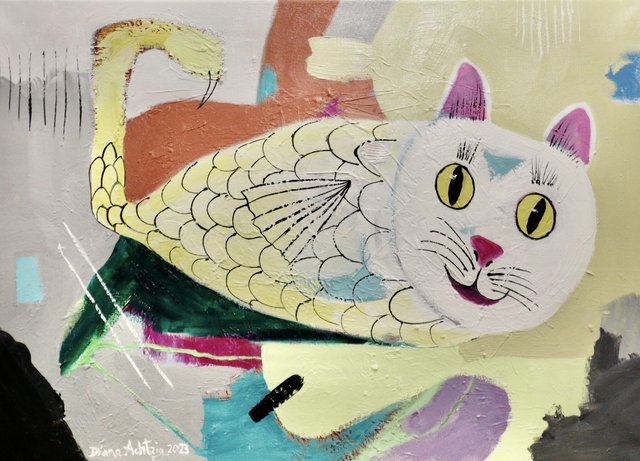
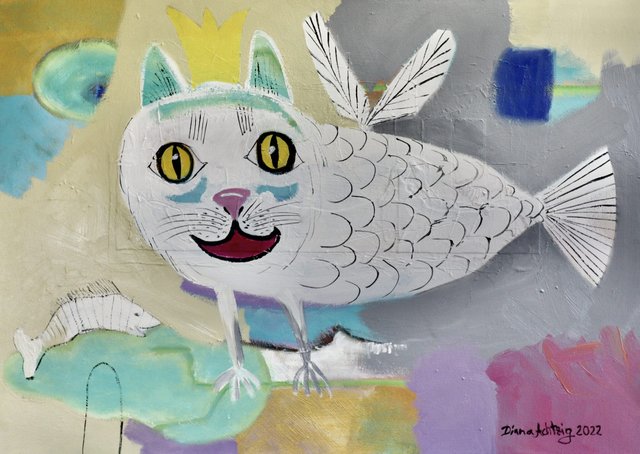
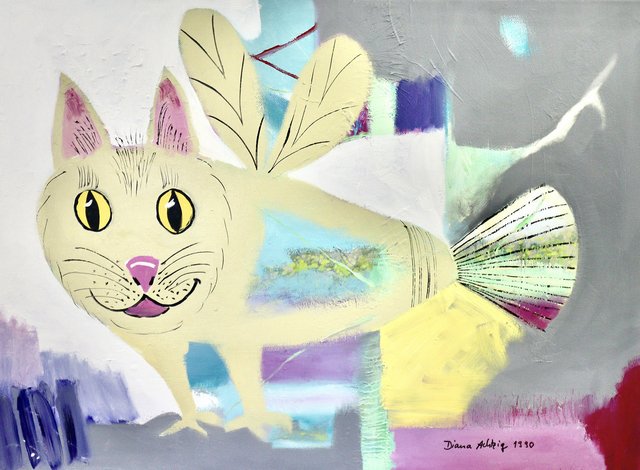
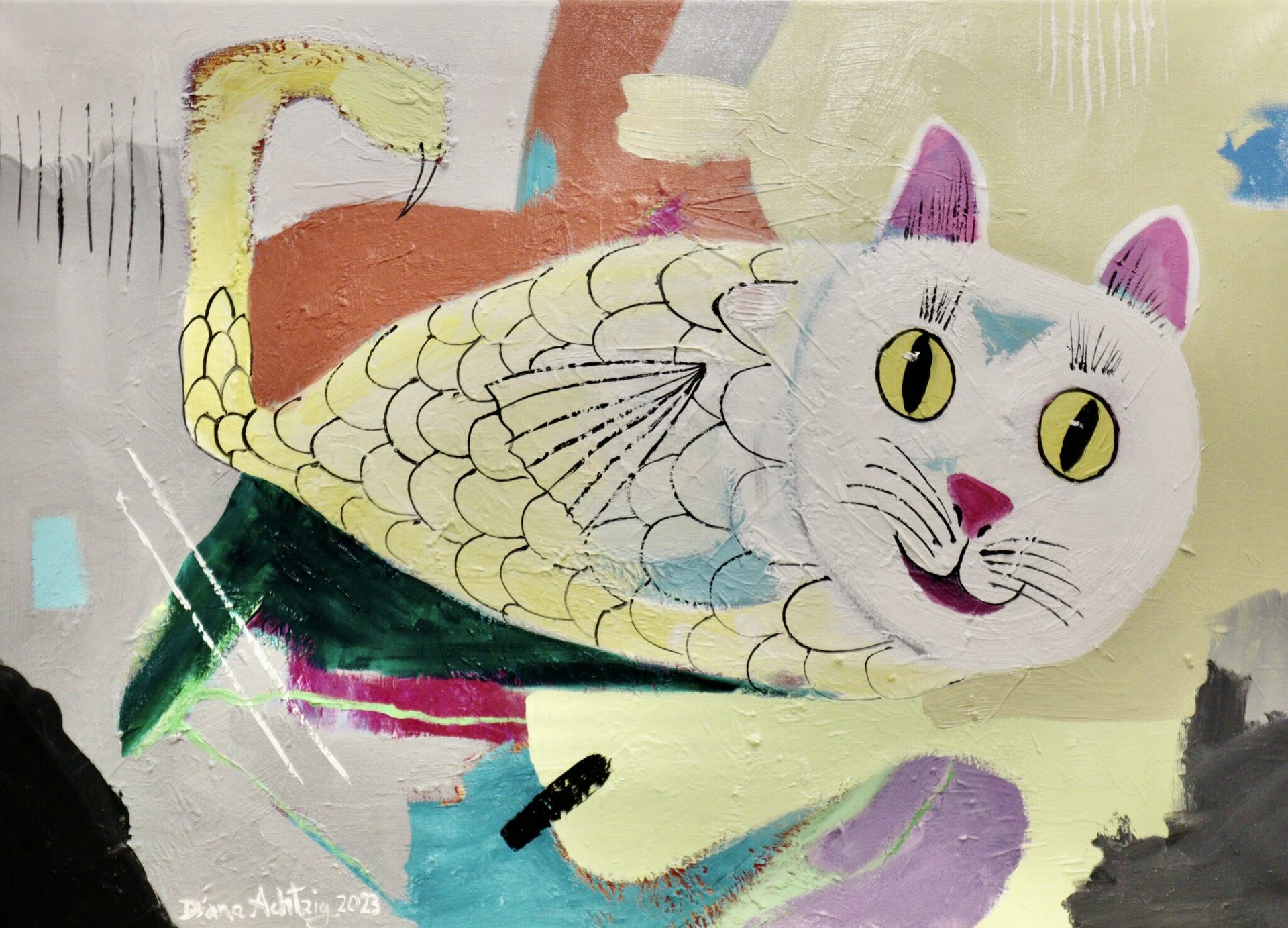
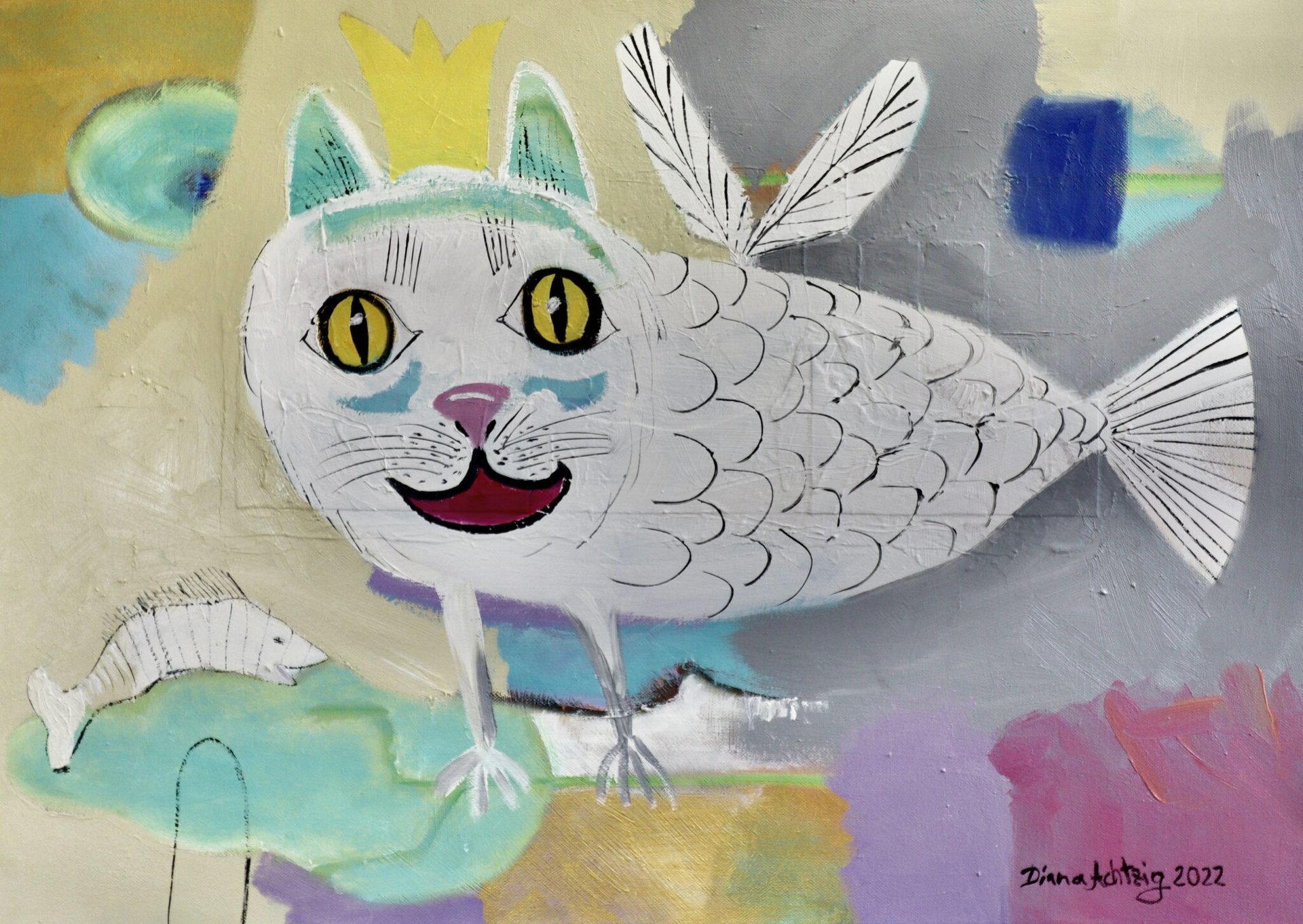
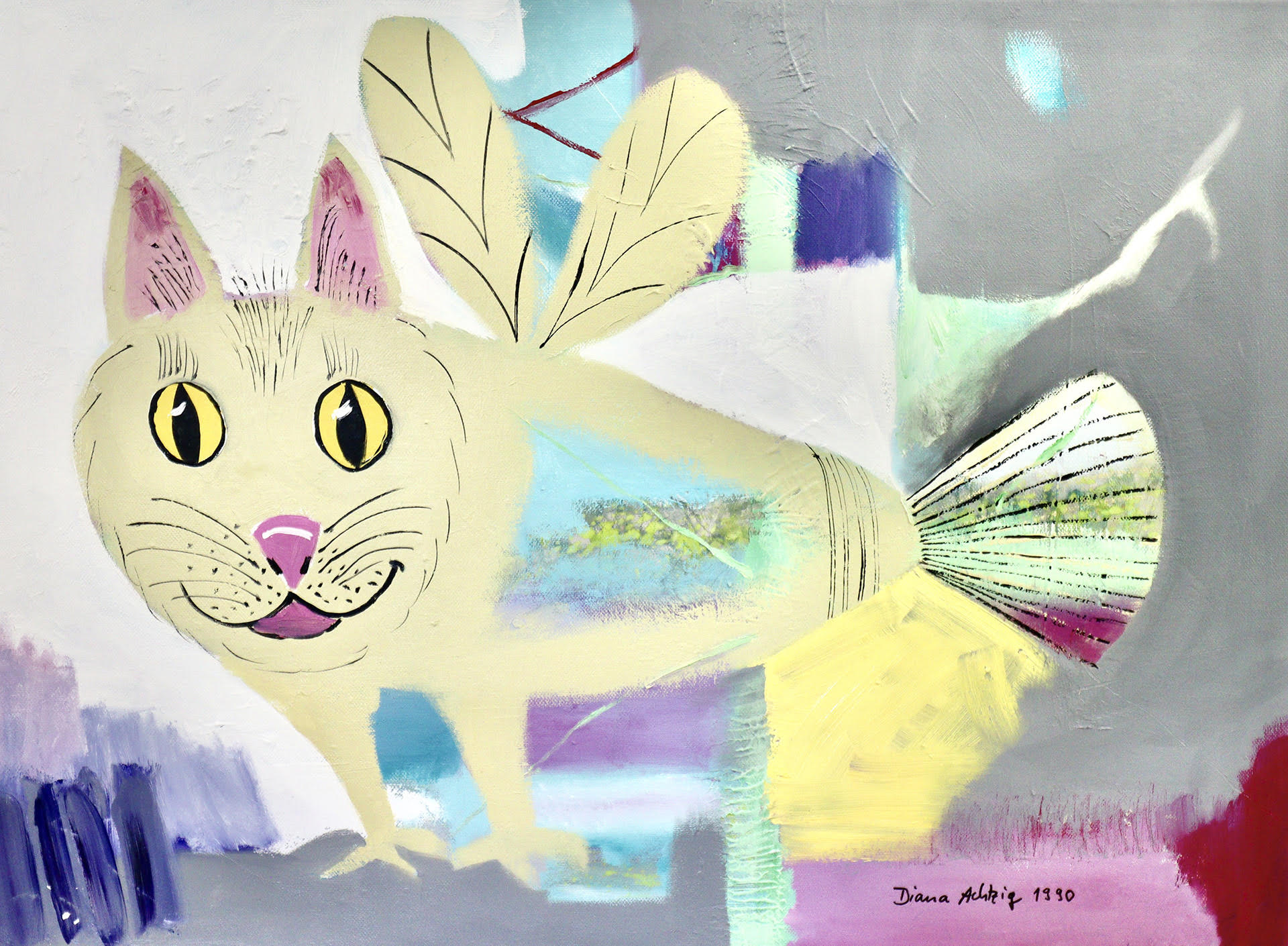
The Berlin painter and gallery owner Diana Achtzig also studied at the HGB Leipzig, among others with Arno Rink. In her series of paintings of catfish, cat, fish, and bird combine into cheerful hybrid creatures, painted in oil against colorful, partly abstract backgrounds. The series has accompanied her for over three decades. More about her education and her works is told in our article Buy art by Diana Achtzig: What distinguishes the painter of HGB Leipzig.
Sources
- Neue Leipziger Schule on Wikipedia
- Leipziger Schule (Visual Arts) on Wikipedia
- Christian Schüle: The Silent Revolt. In: Die Zeit, July 21, 2005
- Hanno Rauterberg: Borrowed Life. In: Die Zeit, July 13, 2006
- Stephan Berg: The Discomfort with the Neue Leipziger Schule. In: Welt am Sonntag, March 2, 2008